Fridge cyberattack hits supermarkets across Europe
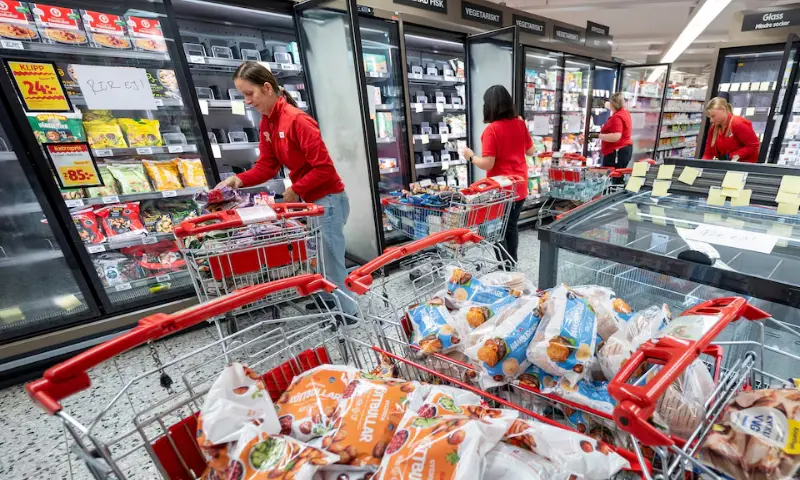
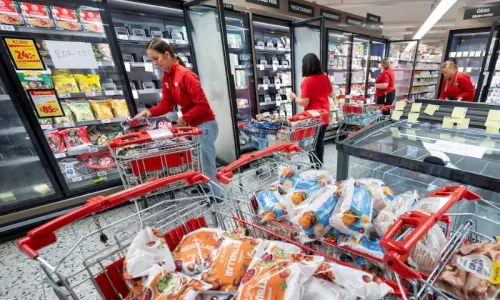
Grocery stores in at least five European countries saw temperatures in their cold cases soar on Monday, with several confirming they had been hit by a cyberattack similar to one three weeks ago in France.
Supermarkets in Belgium, Estonia, Finland, Luxembourg and Sweden were among those affected in the latest hacker attack.
Major French retailers said on Oct 12 that hundreds of store refrigeration systems were hit by a cyberattack, which forced them to throw out spoiled food and raised concerns about food security.
No one has claimed responsibility for either attack.
Carrefour Belgium on Monday reported disruption in about 15 of its 700 stores.
“It’s a cyberattack; there is no other reason,” said spokesman Mich Vergauwen.
An Ikea Belgium spokeswoman likewise said a cyberattack hit its store in Mons, southwestern Belgium, causing the temperature of freezers to rise suddenly in the early hours of Monday.
Chains Delhaize, Colruyt and Intermarche also experienced technical problems affecting their fridges in Belgium, while Delhaize reported that four of its stores in Luxembourg were also affected.
Belgian industrial refrigeration group Sabcobel said it had begun securing its installations after the Oct 12 attack in France, but around 10 per cent were still not fixed, and some were in the shops affected on Monday.
“If Sabcobel hadn’t started this operation … the impact would have been much more important,” chief executive Stephan Moelans told AFP.
In Sweden, chain Coop confirmed six of its around 800 stores had been hit by a cyberattack early Monday.
“We can confirm that it is a cyber incident. The problem has now been resolved, and the fridges and freezers are working as normal,” spokesman Carlos Cancino told AFP.
He said Coop did not know who was behind the attack, but noted that the six affected stores had been connected to a 4G mobile network, not the updated 5G system, which made them “more exposed” to hackers.
‘Vulnerabilities’
Swedish chain Ica also said “a limited number” of its stores experienced refrigeration problems, but the group could not confirm a cyberattack was the cause.
According to Ica spokesperson Helena Johansson, the affected stores were all connected to an external refrigeration control system provided by Danish manufacturer Danfoss — the same supplier targeted in the Oct 12 cyberattack on French retailers.
She referred all queries to Danfoss.
It has not responded to AFP’s request for a comment.
One Ica store located in Sjobo, in southern Sweden, posted on Facebook that its fridges and freezers had “been hacked and they set the temperature at 50 degrees” Celsius.
In Finland, irregular temperatures had also been detected in a few smaller grocery stores belonging to the Kesko group.
“We are currently investigating the cause, and interference via the network has not yet been ruled out,” Petri Kayhko, head of Kesko’s corporate security, told AFP.
Roni Kokkola, an information security specialist at the National Cyber Security Centre at Finland’s Transport and Communications Agency Traficom, would not rule out cyber interference “as far as Finland is concerned”.
“We’ve seen this in Europe in the past few months, so it spreading beyond France to other countries has been expected,” he told AFP.
“Nowadays it’s very typical that all kinds of vulnerabilities are being exploited ever more actively and rapidly.”
In Estonia, at least one supermarket was attacked by hackers who raised the temperature in the refrigeration units to 50°C, public broadcaster ERR reported.
The units were older models delivered by Danfoss, similar to the ones targeted in the France attack, Jann Mutso, director of Kitman Coldtech, a manufacturer and distributor of advanced refrigeration systems, told ERR.
“The handwriting is the same, but I can’t say more,” Mutso said.
Following the attack in France, Danfoss told AFP that most of the affected equipment were “legacy” products which “no longer receive software or security updates”.
EU food and agriculture commissioner Christophe Hansen said at the time that “food security requires more attention at all levels”.
The “exploitation of food” was now a “reality”, he added.