At Kazakhstan forum, Pakistan presents Karachi and Gwadar ports as 'strategic gateways' for Central Asian trade
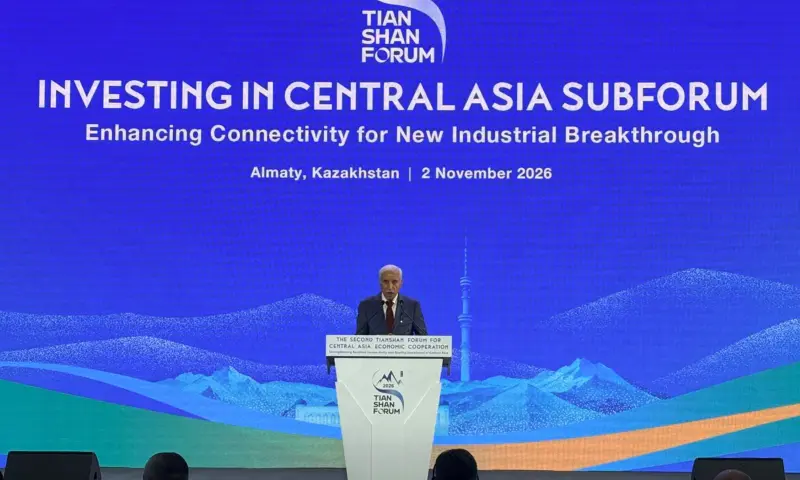
ISLAMABAD: Pakistan can serve as an important trade and transit corridor for the landlocked Central Asian countries, providing them with access to international maritime trade routes and global markets, Minister for Board of Investment (BoI) Qaiser Ahmed Sheikh said on Monday.
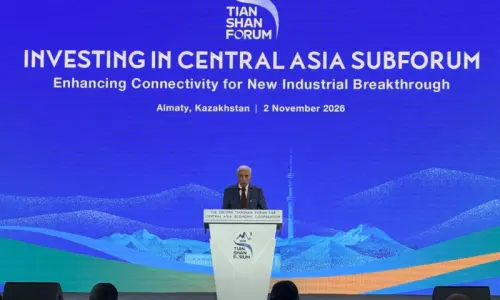
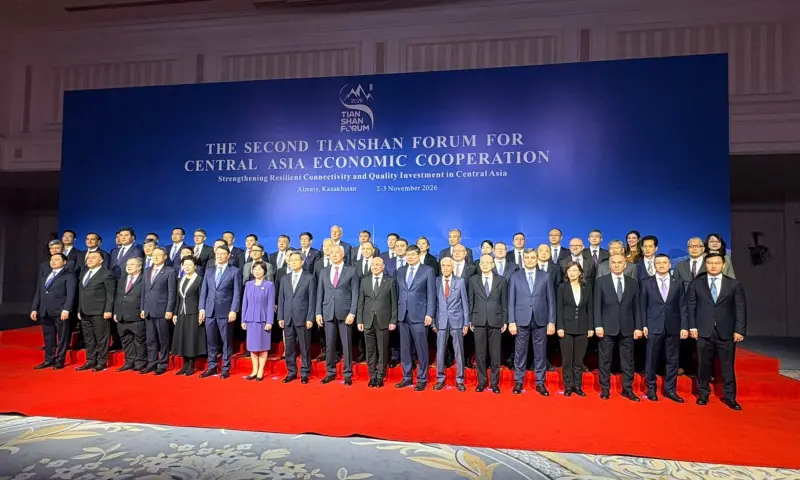
He made the remarks while addressing the opening session of the Second Tianshan Forum for Central Asian Economic and Quality Investment, being held in Kazakhstan’s Almaty.
The minister termed Pakistan’s three major seaports — Karachi Port, Port Qasim and Gwadar Port — “strategic gateways that could facilitate regional trade, strengthen transportation links and provide alternative routes for the movement of goods”, according to a press release by the BoI.
Sheikh particularly underscored Karachi’s importance as Pakistan’s major industrial and commercial hub, noting that its established industrial base, business infrastructure, financial institutions and port facilities offered significant opportunities for trade, industrial partnerships and foreign investment.
He also highlighted Gwadar’s potential to further strengthen regional connectivity and economic cooperation.
Regional connectivity was “not merely about linking roads, ports and markets, but also about connecting economies, creating investment opportunities, generating employment and building shared prosperity across the region”, he remarked.
The minister invited regional and international investors to explore opportunities in key sectors, including energy, infrastructure, logistics, transportation, manufacturing and trade. He emphasised that improved connectivity and reliable energy supplies were essential for unlocking the region’s economic potential, the BoI statement said.
Highlighting the importance of regional cooperation, the minister acknowledged the contribution of the Central Asia Regional Economic Cooperation (Carec) Programme in promoting transport connectivity, facilitating trade and supporting economic integration among participating countries.
He observed that Carec provided a valuable platform for strengthening economic partnerships between Pakistan and Central Asian states, the statement said.
The minister emphasised that Pakistan’s strategic geographical location, youthful population, industrial capacity and seaport infrastructure positioned the country to play an important role in connecting Central Asian economies with international markets.
The Second Tianshan Forum will conclude in Almaty on Tuesday under the theme “Strengthening Resilient Connectivity and Quality Investment in Central Asia”.
According to information provided in its official agenda, the two-day forum is a follow-up to the success of the inaugural Tianshan Forum for Central Asia Economic Cooperation, and is aligned with the new Carec Institute Strategy 2026–2030, as well as the Carec 2030 Strategy Midterm Review Rolling Implementation Action Plan.
“In 2026, the Carec region continues to face a highly uncertain external environment. Rising geopolitical tensions have raised energy and food prices, disrupted transport and logistics, and weakened the reliability of trade corridors,” the agenda said.
At the same time, it added that intra-regional trade remained limited due to similar economic structures, weak production complementarities, and incomplete market opening. Persistent transport and logistics bottlenecks such as uneven infrastructure quality, fragmented asset management, and capacity mismatches kept trade costs high, it added.
“Non-physical barriers, including inconsistent customs procedures, weak digitalisation, non-harmonised standards, and inefficient border operations, further constrain cross-border flows. Meanwhile, digital infrastructure — especially cloud services, data centres, and AI applications — is expanding rapidly and reshaping connectivity and competitiveness,” it said.
It pointed out that Carec countries were progressing unevenly with “large gaps in backbone infrastructure, digital skills, and regulatory coherence”, calling for these gaps to be bridged to “effectively support inclusive growth, resilient connectivity, and regional integration”.
Senior representatives from multilateral development banks, financial institutions, high-level policymakers, business leaders, local governments, and academia across the Carec countries are attending the forum to discuss policy and operational issues in strategic areas such as transport, trade, logistics, energy, and digital connectivity, and promote pragmatic, sustainable investment in the region.