SPEAKING the truth should never be a death sentence. The most recent figures published by the Committee to Protect Journalists highlight that last year was the deadliest year for reporters and media workers ever since the committee started keeping track of journalist killings about 30 years ago. The CPJ notes that at least 124 journalists were killed in 18 countries in 2024, “reflecting surging levels of international conflict, political unrest and criminality worldwide”.
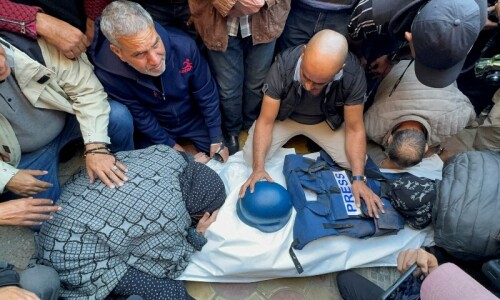
Given its disregard for international law and human rights — as well as its routine engagement in war crimes — it is unsurprising that the Israeli military was the worst offender, by a significant margin. A total of 85 journalists were killed in the Israel-Gaza conflict in 2024, all at the hands of the Israeli military. Of the total, 82 were Palestinians, while three were of other nationalities. Alarmingly, Pakistan ranked at number two, along with Sudan, for the most journalist fatalities.
“Today is the most dangerous time to be a journalist in CPJ’s history,” CPJ CEO Jodie Ginsberg was quoted as saying. It is possibly also the most difficult professionally.
The rise of social media has greatly democratised information creation and sharing. Inadvertently, it has also magnified all the dangers of mass communication that responsible media outlets spent decades building processes and policies to avoid. With disinformation spreading and public discourse growing increasingly polarised, demagogues worldwide have attacked mainstream media, seeking to erode its credibility.
‘Influencers’ have used their clout and platforms to sow distrust against media workers, gradually diminishing public empathy for journalists’ struggles and plight. This much is evident in the apparent lack of concern for journalists’ life and liberty amid a rapid rise in reported fatalities.
“The rise in journalist killings is part of a broader trend of muzzling the media globally. This is an issue that should worry us all — because censorship prevents us from addressing corruption and criminality, and from holding the powerful to account,” the CPJ chief notes.
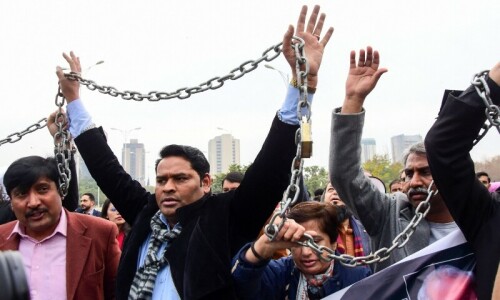
This trend is especially evident in Pakistan, where the media has been under siege for many years amid an ongoing sociopolitical crisis. Attempts to control it have become considerably more brazen with time, and the industry is now being targeted with lawfare as well as outright violence by both state and non-state actors.
Pakistan accounted for six journalist killings in 2024, of which three were deliberately murdered, according to the CPJ. The year marked the first time since 2021 that journalist fatalities were recorded in the country, making the deteriorating situation all the more alarming.
Journalists’ lives should not be written off as mere statistics. They provide a vital public service that involves much personal sacrifice. It is tragic that their important contributions to society are being repaid with increased violence and suppression.
Published in Dawn, February 14th, 2025