Malala says Taliban do not see women as human beings, created a system of ‘gender apartheid’

Nobel Peace Prize laureate Malala Yousafzai on Sunday said that the Taliban did not see women as “human beings” and had created a system of “gender apartheid” by cloaking their crimes in cultural and religious justification.
Since sweeping back to power in 2021, the Taliban government has imposed an austere version of Islamic law that the United Nations has labelled “gender apartheid”.
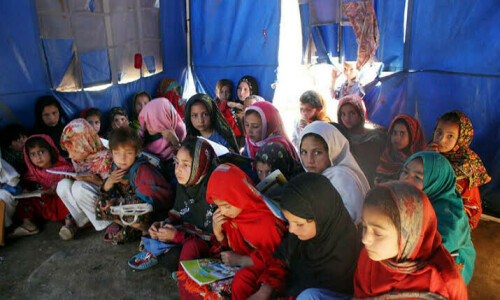
Their curbs have shut women and girls out of secondary school and university education, as well as many government jobs, and seen them sequestered out of many aspects of public life.
While speaking at a summit on girls’ education in Muslim nations being held in Islamabad, the Nobel Peace Prize laureate said the women living under the Taliban system were in a “gender apartheid”.
“The Taliban punish women and girls who dare to break their obscure laws by beating them up, detaining them and harming them,” 27-year-old Yousafzai said.
“Simply put, the Taliban do not see women as human beings,” Yousafzai told the conference. “They cloak their crimes in cultural and religious justification.”
The two-day conference has brought together ministers and education officials from dozens of Muslim-majority countries, backed by the Muslim World League.
Delegates from Afghanistan’s Taliban government did not attend the event despite being invited, Pakistan Education Minister Khalid Maqbool Siddiqui told AFP on Saturday.
Malala said that nothing was Islamic about the policies of the Afghan government and they were “against everything our faith stands for”.
“They are violations of human rights, and no cultural or religious excuse can justify them,” Yousafzai said.
She urged Muslim leaders not to “legitimise” the Afghan Taliban government and to “show true leadership” by opposing their curbs on women and girls’ education.
The Nobel laureate called on the leaders at the conference to recognise the Taliban regime as “perpetrators of gender apartheid.”
“So, let’s not legitimise them. Do not make compromises on our faith,” she said.
She urged them to support the Crime Against Humanity treaty and push their governments to engage in the process.
“It is time we have real tools to prevent an extremist regime from systematically erasing women and girls,” Yousufzai said.
“The path forward for Afghanistan lies in political solutions instead of military force.”
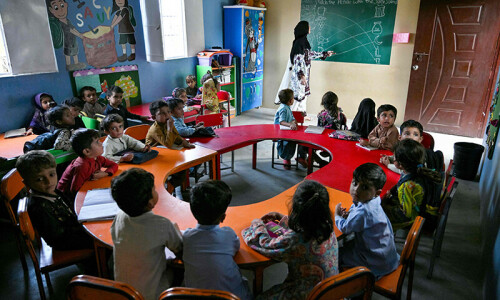
She said that 12 million Pakistani girls were out of school — one of the highest numbers in the world.
“I’m glad that this conference is taking place here in Pakistan, because there is still a tremendous amount of work that is ahead of us, so that every Pakistani girl can have access to her education,” she said.
“As Muslim leaders, now is the time to raise your voices, use your power. You can show true leadership. You can show true Islam,” she said.
“While we celebrate our rich [Islamic] history, we must also turn our attention to the present and the urgent crisis of millions of girls who cannot go to school,” she said.
“This is not just happening in small, far-flung communities[…] this is the lived reality of more than 120m girls globally.”
She added that the Muslim World League should begin by recognising the crisis which was holding economies back by hundreds of billions in lost growth.
“If we do not tackle this crisis […] we will fail to live up to Islam’s fundamental values of seeking knowledge,” she said.
“In Afghanistan, an entire generation of girls is being robbed of their future,” she said.
“The Taliban have ripped away the right to learn from every Afghan girl […] they want to eliminate women and girls from every aspect of public life and erase them from society,” Yousufzai said.
Yousafzai was shot in the face by the Pakistani Taliban when she was a 15-year-old schoolgirl in 2012, amid her campaigning for female education rights.
Her activism earned her the Nobel Peace Prize in 2014, and she has since become a global advocate for women’s and girls’ education rights.
While there is an outcry in much of the international community over the Taliban government curbs, nations are divided over how to engage with Kabul’s rulers on the issue.
Some countries argue they should be frozen out of the diplomatic community until they backtrack, while others prefer engagement to coax them into a U-turn.
No country has officially recognised the Taliban authorities, but several regional governments have engaged on the topics of trade and security.