Weary from long years of biting sanctions and worried about US threats of military action, Iranians have responded to the prospect of talks this weekend with expressions of hope that have boosted their stock market and depressed currency.
The talks in Oman are to address the long dispute between Iran and the West over its nuclear programme, though Iranian officials are sceptical of progress and US President Donald Trump has repeatedly threatened to bomb if no deal is reached.
Many people in Iran to whom Reuters spoke by phone remained pessimistic about the future. But even the slim chance of a deal with an unpredictable US president who has often boasted of his negotiating skills has given some people a little optimism.
Trump announced the talks on Monday. By Wednesday, Iran’s rial currency, which had sunk to a record low of 1,050,000 to the dollar and whose value often tracks Iran’s geopolitical shifts, had strengthened slightly to 999,000 to the dollar.
Tehran’s stock exchange rose by 2.16 per cent on Tuesday, its best performance since January, as investors shifted from safe havens in gold and foreign currency to domestic shares. The market had risen by another 1.1pc in early trading on Wednesday.
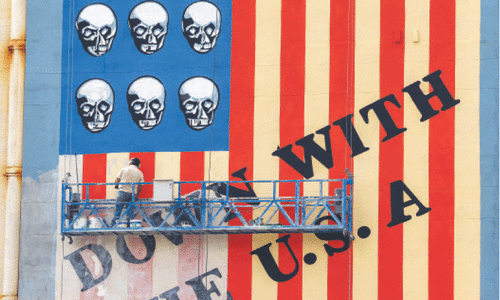
Iran has had tense relations with Western powers and other major countries for much of the decades since its 1979 Islamic Revolution, particularly since 2003 when the dispute over its uranium enrichment programme moved to centre stage.
“For years, we have suffered over this dispute. It is time to end this standoff. We want to live a normal life with no hostilities and particularly no economic pressure,” said Amir Hamidian, a retired government employee in Tehran.
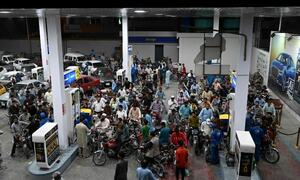
“I don’t want my country to be bombed … Life is already too expensive. My purchasing power is shrinking every day,” said the father of three, whose monthly salary equates to about $120.
Despite their tough rhetoric, the Islamic Republic’s clerical establishment feels compelled to agree to talks because of fears that anger over the deteriorating economy could spark protests, four Iranian officials told Reuters in March.
Economists believe that sanctions relief could lower import costs and boost export prices for Iranian firms, but wary investors are sticking to short-term bets amid doubt over the outcome of the talks scheduled for Saturday.
Anxiety
Many ordinary Iranians, who have seen repeated fruitless efforts to resolve the government’s standoff with the West, voiced little faith in the outcome of the discussions.
Minou, a 32-year-old housewife and mother of two in the central city of Isfahan, was pessimistic.
“There will be no deal. There is a huge gap between the sides. Trump is going to bomb us. What should we do? Where should we go? I have withdrawn all my savings from the bank to have cash at home if the US or Israel attack Iran,” she said.
Trump has signalled the renewal of his “maximum pressure” approach to Tehran, which during his first term in 2017-21 helped crash Iran’s economy with sanctions on its oil exports though it has also found ways to evade the embargo.
President Masoud Pezeshkian has repeatedly said the sanctions have made Iran’s economic problems more challenging even than during the Iran-Iraq war in the 1980s.
“I am worried to death. Enough is enough. Just reach a deal and end our misery,” said Mahsa, 22, a university student in the northern city of Sari.
Since 2017, Iranians have staged periodic nationwide demonstrations over poor living standards, calling for “regime change”.
But some hardliners are putting their faith in Supreme Leader Ayatollah Ali Khamenei, who — in the Islamic Republic’s complex power structure — has the final say on matters of state.
“Our supreme leader is fully aware of the situation and he will lead us out of trouble. Whatever he decides, we will support it,” said Mohammad Amin Hosseini, 27, from the northeastern city of Mashhad.