Pressure builds on Afghans fearing arrest in Pakistan

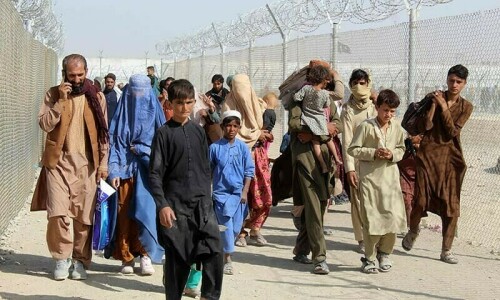
Convoys of Afghans pressured to leave Pakistan are driving to the border, fearing the “humiliation” of arrest, as the government’s crackdown on migrants sees widespread public support.
Islamabad wants to deport 800,000 Afghans after cancelling their residence permits — the second phase of a deportation programme which has already pushed out around 800,000 undocumented Afghans since 2023.
According to the UN refugee agency, more than 24,665 Afghans have left Pakistan since April 1, 10,741 of whom were deported.
“People say the police will come and carry out raids. That is the fear. Everyone is worried about that,” Rahmat Ullah, an Afghan migrant in Karachi told AFP.
“For a man with a family, nothing is worse than seeing the police take his women from his home. Can anything be more humiliating than this? It would be better if they just killed us instead,” added Nizam Gull, as he packed his belongings and prepared to return to Afghanistan.

Abdul Shah Bukhari, a community leader in one of the largest informal Afghan settlements in Karachi, has watched multiple buses leave daily for the Afghan border about 700 kilometres away.
The maze of makeshift homes has grown over decades with the arrival of families fleeing successive wars in Afghanistan. But now, he said, “people are leaving voluntarily”.
“What is the need to cause distress or harassment?” Bukhari said.
‘Harassed every day’
Ghulam Hazrat, a truck driver, said he reached the Chaman border crossing after days of police harassment in Karachi. “We had to leave behind our home. We were being harassed every day.”
In Peshawar, police climb mosque minarets to order Afghans to leave: “The stay of Afghan nationals in Pakistan has expired. They are requested to return to Afghanistan voluntarily.”

Police warnings are not only aimed at Afghans but also at landlords.
“Two police officers came to my house on Sunday and told me that if there are any Afghan nationals living here they should be evicted,” Farhan Ahmad told AFP.
Human Rights Watch has slammed “abusive tactics” used to pressure Afghans to return to their country, “where they risk persecution by the Taliban and face dire economic conditions”.
In September 2023, hundreds of thousands of undocumented Afghans poured across the border into Afghanistan in the days leading up to a deadline to leave, after weeks of police raids and the demolition of homes.
‘That is their country’
After decades of hosting millions of Afghan refugees, there is widespread support among the public for the deportations.
“They eat here, live here, but are against us. Terrorism is coming from there (Afghanistan), and they should leave; that is their country. We did a lot for them,” Pervaiz Akhtar, a university teacher, told AFP at a market in Islamabad.
“Come with a valid visa, and then come and do business with us,” said Muhammad Shafiq, a 55-year-old businessman.

His views echo the government, which for months has blamed rising violence in the border regions on “Afghan-backed perpetrators” and argued that the country can no longer support such a large migrant population.
However, analysts have said the deportation drive is political.
Relations between Kabul and Islamabad have soured since the Taliban returned to power in 2021.
“The timing and manner of their deportation indicate it is part of Pakistan’s policy of mounting pressure on the Taliban,” Maleeha Lodhi, the former permanent representative of Pakistan to the UN told AFP. “This should have been done in a humane, voluntary and gradual way. “