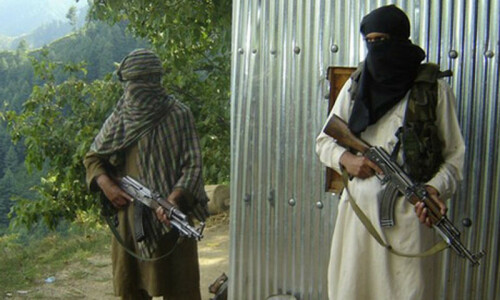
THE outgoing year has been marked by a resurgence in terrorism, particularly by the banned TTP, with an upsurge in attacks resulting in high losses amongst security personnel belonging to both the military and police.
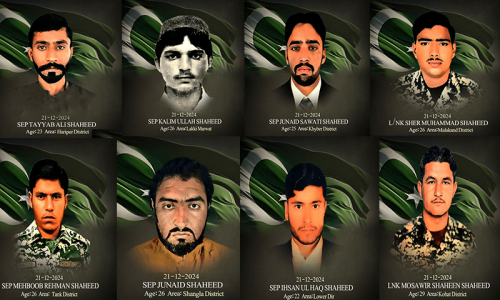
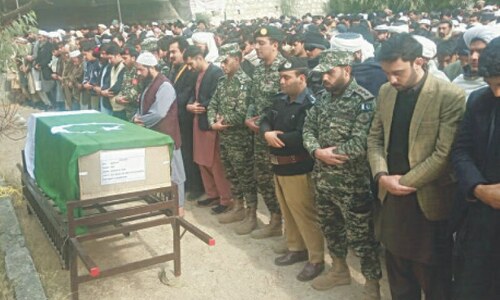
The Dec 20 attack in South Waziristan, in which at least 16 security personnel were martyred, is a painful reminder of this sombre reality. Yet the state has not been able to launch any long-lasting countermeasures against terrorists. While kinetic actions are taken in the aftermath of such tragedies, militants manage to recoup their energies and resume their attacks on security men. This bloodstained cycle must be broken through decisive action against terrorist groups so that they are no longer in a position to harm civilians or security personnel.
The army chief on Sunday, while interacting with troops in Wana, pledged to pursue fitna al-khawarij, the military’s term for the TTP, “till its elimination”. While few will disagree with the need to achieve this goal, the difficult part is how to go about it. The state’s strategy to counter militant groups is clearly not delivering the desired results. Figures published in the media suggest that the number of terrorist attacks in the current year have increased considerably over 2023. Moreover, hundreds of military personnel have been martyred in attacks in 2024; the number of police martyrs would add to this total. Such a high loss of troops during peacetime is a matter of great concern.
Earlier this year, the state announced the launch of the Azm-i-Istehkam campaign against terrorism. Yet the continuing attacks illustrate the fact that our counterterrorism measures need a revamp. Launching a fully fledged operation will be costly in terms of lives and finances, while it will also cause significant dislocation of civilian populations in the affected areas. Therefore, localised intelligence-based operations appear to be a sound and available option.
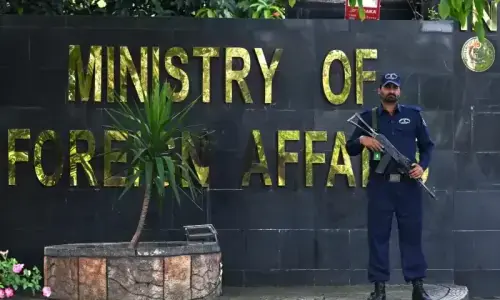
Moreover, special CT teams — well-versed in the asymmetrical methods employed by the terrorists — should be raised within the military and police forces to quell this deadly threat. The TTP havens in Afghanistan also need to be taken up with Kabul’s Taliban rulers, as Balochistan and KP, which both border Afghanistan, have been the hardest hit by terrorist activity. The Taliban must be told in unambiguous terms that if they cannot neutralise anti-Pakistan forces, these malign elements need to be moved far from the border so that they are unable to harm this country.
But most of all, we need to secure our own territory, and ensure that no terrorist group is able to establish a foothold here and challenge the writ of the state. A serious rethink is in order so that the terrorist attacks and related fatalities can be brought down in the coming year.
Published in Dawn, December 24th, 2024