JUST how much longer does the government plan on throttling the internet is a question up in the air right now.
Shamefully, no attempt was made to explain this recently during a National Assembly session, where the parliamentary secretary for cabinet secretariat said that it was not possible to provide a time frame and it is up to the interior ministry to decide whether ‘security challenges’ supposedly calling for such disruptions persist. Such statements make one question the state’s true motives. There is much beating of the drum regarding threats to national security but how is one to believe it was not a cover all along? A ruse under which control over the internet was being established through a national firewall?
This lack of a clear timeline on internet restoration has had a distressing impact on ordinary citizens. It has left business, students, and freelancers in the lurch. Notably, while X has been banned, platforms like Facebook and TikTok remain operational. This selective approach undermines claims of prioritising national security. If security is the concern, why spare other platforms? Adding insult to injury, government ministers are frequently seen posting on X, signalling that they have no issue circumventing the restrictions. What about the common man who lacks the means to bypass internet throttling and disruptions?
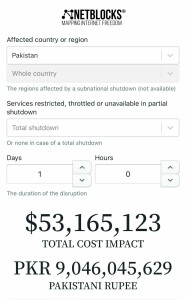
The fallout is severe. Pakistan’s rapidly growing IT sector has been dealt a significant blow. The Pakistan Software Houses Association estimates that such disruptions could cost up to $300 million. Freelancers face reputational damage and financial losses, e-commerce activity has declined, and students relying on online learning are stranded. Adding to this is the absurd introduction of the Digital Nation Pakistan Bill. How can a government champion digital transformation while dismantling the infrastructure it needs to succeed? This contradiction has not gone unnoticed, with parliamentarians themselves mocking the initiative’s lack of credibility under current conditions.
The narrative of prioritising national security over connectivity is flawed. While boosting cybersecurity is essential, policies must balance safety and freedoms. Blanket curbs that punish the majority for the actions of a few are unjust and counterproductive, eroding trust in institutions. The government must recognise that internet access is not a luxury but a fundamental need for economic participation and educational advancement.
The notion that Pakistan enjoys unprecedented freedom of expression, as claimed by the IT minister, is difficult to reconcile with the reality of such restrictions. The people deserve better. It is high time the government restored unrestricted internet access and developed a more balanced approach that protects both security interests and digital rights. The future of our digital economy and the aspirations of millions of Pakistanis depend on it.
Published in Dawn, December 23rd, 2024