Minimum retail price at import stage to make ‘cuppa’ costlier


KARACHI: The Federal Board of Revenue’s (FBR) decision to fix the minimum retail price (MRP) of tea at Rs1,200 per kg for levying sales tax would make the commodity more expensive, warned traders on Tuesday.
Pakistan Tea Association (PTA) Chairman Mohammad Altaf said the MRP at the import stage would have an adverse impact of Rs150-300 per kg on imported tea prices.
The flat MRP also ignores global tea prices hovering between 0.50 cents to over $3 per kg. Tea is imported in different packaging, with bulk shipments typically weighing more than 5kgs and around/approximately 80kgs. An 18 per cent general sales tax is already charged based on the imported tea.
He said before fixing the MRP for sales tax purposes, it is crucial to consider that the definition of “manufacturer” in Section 2(16) of the Sales Tax Act 1990, includes activities such as blending, mixing, processing, and packaging, as clarified in Circular No. 3(11) ST-L&P/2013-94433-R dated July 17, 2019. Based on this, tea imported for these processes qualifies as “raw material”.
Tea sellers warn FBR move will incentivise arrival of low-quality product via illegal channels
“According to judicial interpretations (e.g., CTO v. Rajasthan Taxchem Ltd., 2007) and definitions in Advanced Law Lexicon, “raw material” includes ingredients necessary for manufacturing. Tea used in blending and packaging clearly falls under this category, he added.
Accordingly, sales tax should be based on the import value, as per Subsection 46(f) of Section 2 of the Sales Tax Act, 1990, rather than the minimum retail price, Altaf said.
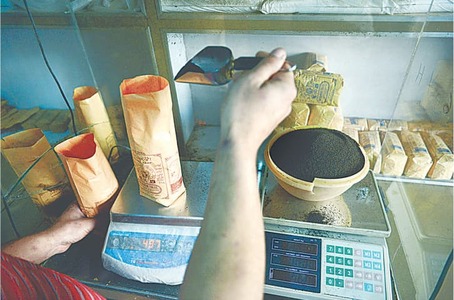
Tea retail prices vary significantly due to numerous factors, including the company, method of sale (open or packaged), product quality, and regional differences. The PTA chief said that the flat MRP rate per kg also does not reflect the prices charged by most traders, manufacturers, and sellers.
The imposition of a flat rate per kg would have severe negative consequences for a large portion of the tea trade, which may result in reduced business activity and ultimately lead to a loss of revenue for the national exchequer via misusing several exemptions.
Two-thirds of Pakistanis purchase tea at Rs700-950 per kg, reflecting socio-economic and regional price variations.
He said that MRP cannot be applied at the import stage as the tea has to follow various value-addition procedures before it is made shelf-ready. “This MRP disrupts the supply chain and eradicates the role of wholesalers and distributors who play a vital role in the business, while MRP at the import stage also eradicates the basic right of commercial imports,” the PTA chief observed.
Tea is a part of our daily diet, a staple food item, not a drink.
Most people in rural and urban areas consume tea as per their earnings. Further fixing of MRP will incentivise unscrupulous elements to exploit the situation, and thus, import of low-priced teas will find its way through illegal channels, Altaf feared.
Published in Dawn, November 13th, 2024