WITH the storm around the government’s planned amendments to the Constitution now behind it, will parliament turn its attention once again to protecting its privileges and reasserting the stature it has been granted within the configuration of the state?
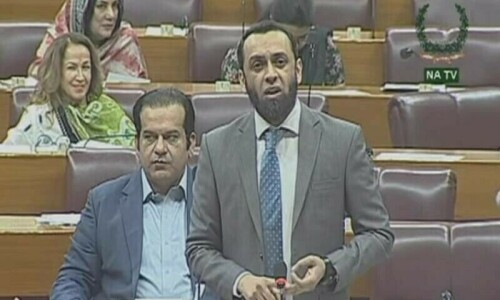
The issue, it may be recalled, had been taken up last week after masked individuals entered the National Assembly’s premises to arrest several lawmakers associated with the PTI — a serious infraction of House privileges that had triggered an uproar on both the treasury and opposition benches.
In the aftermath, a special 16-member committee was set up through a unanimous motion moved by the Lower House, which has been followed by the formation of a similar 13-member committee in the Senate as well. The committees are tasked with discussing, analysing and making recommendations regarding issues related to parliament, rules and procedure, and conduct of business.
While the committees get to work on their mandates, it is pertinent to examine the scope of the crisis parliament faces today. Over the years, a series of poor precedents have been set under successive governments that have greatly undermined its prestige and power. For example, it would be a big step towards restoring the prestige of parliament if our elected representatives agreed to stop constantly painting each other as the vilest villains to roam the earth. The executive and judiciary have remained shielded from the kind of continuous controversy that afflicts the legislature mainly because they do not air their members’ dirty linen in public.
This, of course, should not be taken to mean less transparency and accountability; however, there is an urgent need to set some basic rules of engagement between political rivals.
Relatedly, there is a need to realise that parliament and its members must be respected regardless of who controls the government and who sits on the opposition benches. For example, parliament injures itself when it blacks out the speeches of some of its lawmakers. If parliamentary privileges protect all lawmakers’ speeches on the floor of the House, then no power should be able to dictate which speeches can be heard by the public, and which cannot. It should be left to parliamentarians to bear responsibility for their words.
Secondly, those who champion parliamentary politics must also respect its procedures. Attempts to bulldoze major legislation through backdoor deals, with votes coerced out of unwilling lawmakers, undermines everything parliament stands for. Legislative activities must be open to scrutiny and debate — it is this transparency from which parliament derives its legitimacy and, ultimately, its power.
Lastly, the effort to restore parliament’s sanctity must not be predicated on the actions or words of any individual. It must rise above all political differences, no matter how serious, if it is to achieve its intended results.
Published in Dawn, September 17th, 2024