• Mills to resume regular operations today
• Flour prices already on the rise after three days of strike
ISLAMABAD / LAHORE: The Pakistan Flour Mills Association (PFMA) announced on Saturday that it would postpone its strike until July 22 after receiving assurances from the government regarding resolution of the withholding tax issue.
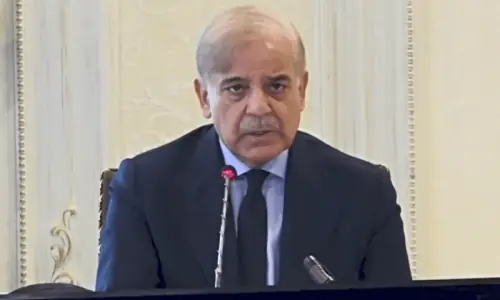
The decision was made following a meeting between a PFMA delegation and a special government committee formed at the directive of Prime Minister Shehbaz Sharif.
The PFMA delegation, led by Chairman Asim Raza Ahmed and Farrukh Shahzad, met Minister of State for Finance Ali Pervez, Minister for Economic Affairs Ahad Cheema, Law Minister Azam Nazeer Tarar, and FBR Chairman Amjed Zubair Tiwana.
“The committee agreed with the position of the Flour Mills Association and assured a positive resolution by July 22,” delegation member Khurram Shahzad told Dawn. “Prime Minister Shehbaz Sharif sought suggestion or proposals from the association and assured to look into the matter positively.”
He confirmed that the association had postponed the strike and that flour mills would resume regular operations from Sunday (today).
The association earlier expressed concerns over the imposition of withholding tax, with the government committee agreeing to address the issue. In a statement, the PFMA spokesperson cited respect for the holy month of Muharram and the government’s assurances as reasons for delaying the strike.
During the meeting, the PFMA delegation briefed the committee on the reasons behind the strike, emphasising the adverse impact of withholding tax on the industry and consumers. The committee members unanimously assured the delegation that a solution would be found by July 22.
The mills had been on strike for the past three days, protesting the government’s decision to “make them withholding tax agents”.
On Saturday afternoon, at a press conference held at the Rawalpindi Chamber of Commerce and Industry (RCCI), former PFMA chairman Riazullah Khan condemned the tax implementation. He argued that the government should collect taxes directly from wholesalers and retailers rather than imposing the responsibility on flour mill owners.
Market feels the pinch
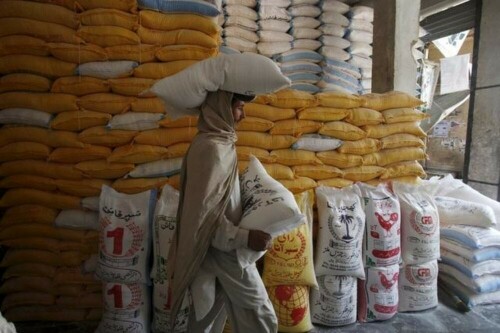
Meanwhile, as the strike entered its third day on Saturday, the market began to feel the impact, with flour prices rising. A 20kg bag of flour was selling for around Rs2,500 in most parts of the country, significantly higher than the official price of Rs1,800 per bag.
Market reports suggested that while there were no immediate shortages at retail, concerns about scarcity in the coming days were driving up prices due to speculative pressures.
Normally, the flour pipeline holds 200,000 tonnes of supply, which is sufficient to meet five days of national consumption. However, the three days of strike created a gap of around 120,000 tonnes — the mills routinely grind around 40,000 tonnes of wheat on average — and it has started exerting pressure on the market. Speculative pressure is in addition to the actual supply gap.
“It is natural for speculative pressure to build up in such a situation,” said Majid Abdullah, a prominent miller from Lahore. “If prices start rising today, they will increase more rapidly tomorrow. Panic buying will only exacerbate the crisis.”
A brief meeting between millers and the Punjab government on Saturday failed to break the deadlock, with both sides maintaining their positions. A participant of the meeting said government officials cited commitments to the International Monetary Fund (IMF) as a reason for their stance.
Muhammad Ramzan, a distributor from central Punjab, noted that retailers were currently controlling prices, leading to regional variations. Panic buying had also begun, with consumers buying more flour than usual to secure their staple food, he added.
Meanwhile, the RCCI held a consultative meeting with PFMA representatives, with RCCI leader Suhail Altaf urging the government to resolve the issue. “The business community is ready to play a role in solving the flour crisis,” Mr Altaf said.
“Flour mills have been taxed unnecessarily, and we refuse to become tax collection agents,” added former PFMA chairman Riazullah Khan.
Published in Dawn, July 14th, 2024