Ex-SC judge Mazahar Naqvi ‘guilty of misconduct’, should’ve been sacked: Supreme Judicial Council
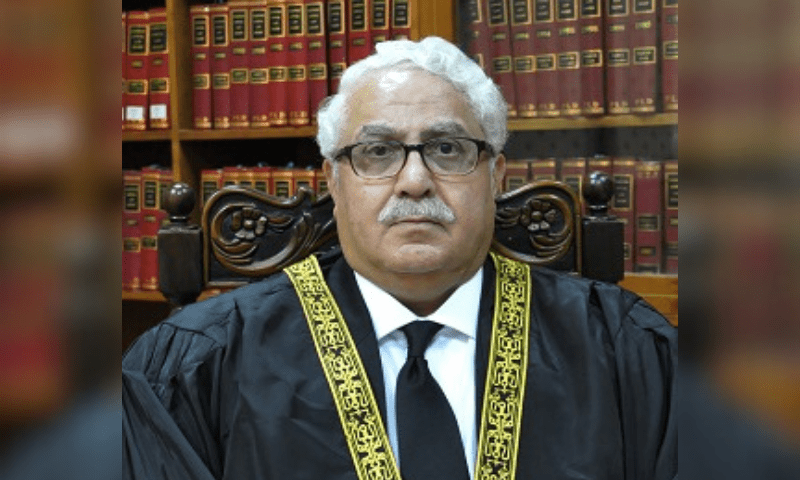
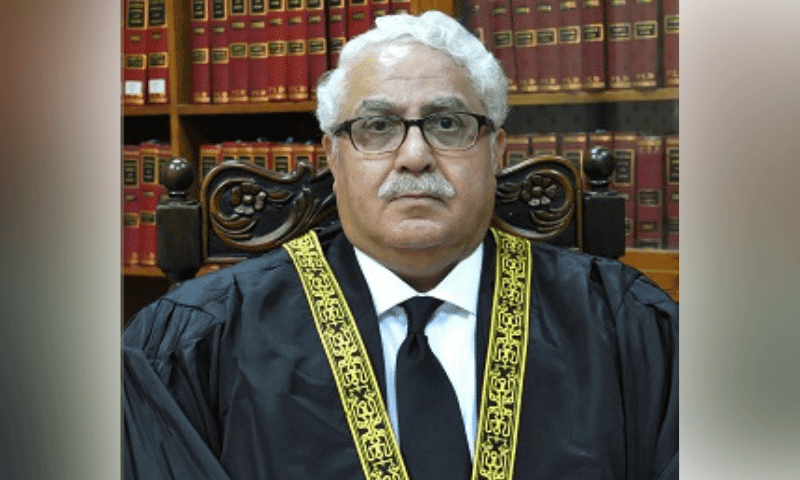
The Supreme Judicial Council (SJC) has ruled that the apex court’s retired judge Sayyed Mazahar Ali Akbar Naqvi was “guilty of misconduct” and recommended that he “should have been removed from the office of judge”.
Headed by CJP Isa, the SJC comprises SC’s Justice Tariq Masood and Justice Mansoor Ali Shah, Lahore High Court Chief Justice (CJ) Muhammad Ameer Bhatti, and Balochistan High Court (BHC) CJ Naeem Akhtar.
Its recommendation is unlikely to be of any consequence as Naqvi, in a letter addressed to President Dr Arif Alvi on Jan 10, had already resigned, saying that it was no longer possible for him to continue due to circumstances which were “a matter of public knowledge”.
In a press release issued today, the SJC stated that its members met on Feb 29 when a series of matters were discussed, one of which was the allegations against Naqvi.
The council “rendered its opinion in respect of the nine complaints” against the judge under Article 209 (6) of the Constitution before making its recommendation against him.
References were filed before the SJC against Justice (retd) Naqvi early last year after his name surfaced in connection with an alleged audio leak.
In October, the SJC had issued a show-cause notice to Naqvi in connection with 10 complaints lodged against him and directed the judge to submit a reply within two weeks.
In a preliminary reply submitted in November, Naqvi had cited “serious prejudice” against him and said CJP Isa, Justice Masood and CJ Akhtar should recuse themselves and not hear the matter.
On Nov 20, Naqvi contested the SJC proceedings against him and also challenged the show-cause notice issued to him by the council, stating the initiation of proceedings was coram non-judice and without lawful authority.
Subsequently, the SJC had issued a fresh show-cause notice to Naqvi on Nov 22, with a direction to come up with his defence by filing a reply within a fortnight.
On December 4, Naqvi had again approached the apex court and expressed his intent to pursue the constitutional petition he had moved earlier seeking to quash the revised show-cause notice issued by the SJC.
Two days later, Naqvi had invited the attention of the SC committee comprising three senior-most judges to the silence over his petitions challenging the issuance of the show-cause notice (SCN) despite the lapse of time as stipulated in the Supreme Court (Practice & Procedure) Act, 2023.
Naqvi had also written a separate letter to the SJC secretary, asking the latter to furnish a number of documents without which, the judge said, he would not be in a position to prepare his reply to the show-cause notice within time.
On December 15, the SJC, in an open hearing, had given two weeks to the top court judge to respond to the misconduct allegations and directed him to submit a reply to the show-cause notice by January 1.
Subsequently, the judge had filed a detailed response to the show-cause notice, saying the allegations against him “absolutely and maliciously false”, giving a detailed response to each of the 10 allegations made against him.
In the detailed response, a copy of which is available with Dawn.com, he said the SJC was not empowered to entertain any complaint against a judge and was only entitled to receiving “information”.
On January 8, Naqvi had withdrawn his objection to the three-judge bench hearing his plea challenging the issuance of a show-cause notice to him.
On January 10, the Supreme Court rejected a request to stay Jan 11 SJC proceedings against Justice Sayyed Mazahar Ali Akbar Naqvi, as the then SC judge Ijazul Ahsan — who himself resigned a day later — described the council’s proceedings against his colleague “contrary to the established norms”.
Ahsan — part of the five-member SJC — who had refused to join other members of the council on Nov 22, 2023, in the issuance of the show-cause notice to Justice Naqvi, had regretted the hasty proceedings.
In his letter to the SJC members, Ahsan had regretted that debate and discussion have been non-existent and have not been permitted during the ongoing council proceedings. “Thus Nov 22, 2023 proceedings when the second show-cause notice was issued against Justice Naqvi were completely devoid of any discussion or deliberation whatsoever,” he said.
“This manner of proceedings has cast an unwelcome doubt over the whole process, therefore he disagreed with the process followed and the manner in which the proceedings were being conducted,” Ahsan had said.
Referring to the allegations in the complaint against the judge, the letter had regretted these were utterly without merit or substance, both in law and even on a prima facie appraisal of the facts.
Code of Conduct amended to allow judges to respond to publicised allegations
The SJC, in its press release, revealed that it has amended Article-V of its Code of Conduct to allow judges to respond to allegations that have been publicised.
It noted that “allegations are levelled against the judges of the Supreme Court and high courts and the same are publicised,” adding that a number of judges had expressed concern that “if they respond to such allegations the same may be considered as misconduct.”
The press release said that the code of conduct dated September 2, 2009, stated that “a judge should not seek publicity”.
It noted that the SJC deliberated upon the matter and concluded that “if a reply or clarification is issued by or on behalf of a judge, it does not violate Article V.”
The statement said since judges expressed concern over this, it was decided to add the following line to Article-V. “However, if an allegation is publicised against a judge, he may respond to it.”
The press release also that SJC issued a notice to a BHC judge in respect of complaints against him and asked him to submit a reply to the allegations levelled against him within 14 days.