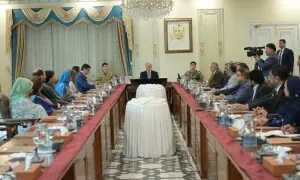
ALONG with fixing the economy and addressing the political polarisation, the new administration that takes charge after February’s elections will also have to put Pakistan’s external relations on track. The unfortunate truth is that ties with three out of our four neighbours are strained, and it will take deft diplomacy to improve matters. Relations with India are the most complicated, and fixing these will be a time-consuming process. Bilateral ties with Afghanistan and Iran are also lukewarm and, in the case of the latter, have witnessed severe turbulence over the past few days. However, relations with both Kabul and Tehran can be mended relatively easily if we play our cards right, and if there is a reciprocal response from the other side. The positive signals emanating from Friday’s National Security Committee meeting, the prime minister’s comments, and the phone conversation between the Pakistani and Iranian foreign ministers indicate that ties are on the mend.
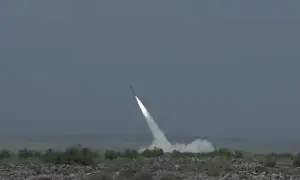
The relationship with India has been in deep freeze since August 2019. Elections are due in India in the next few months, and at this point, it appears that a BJP government will again run New Delhi. It remains to be seen whether the new Indian set-up will be willing to turn the page with Pakistan, or if toxicity will continue. The new administration in Islamabad should, however, extend a hand of friendship to New Delhi, without compromising on Pakistan’s key concerns. As for Kabul, the Afghan Taliban are difficult customers; yet Pakistan has no option but to engage with them. The recent border closure at Torkham has shown that even administrative disputes can quickly spiral into bigger spats. The incoming administration should work to mend ties with Kabul and improve trade relations, while reiterating Pakistan’s demand that terrorist groups operating from Afghan soil be reined in. With regard to Iran, before Tehran’s provocative strikes in Panjgur, ties were cordial, though there was room for improvement. Luckily, sense has prevailed after the Iranian strike and Pakistan’s retaliation, and matters are returning to normal. However, there can be no further infringement of this country’s sovereignty. The incoming set-up cannot achieve internal stability and economic progress if there is tension on three frontiers. Furthermore, it is essential that Pakistan’s foreign policy is fashioned and led by professional diplomats, who are well-versed in the nuances of international relations.
Published in Dawn, January 20th, 2024