0
0


WASHINGTON: More debris and suspected human remains have been recovered from a privately owned submersible which failed catastrophically in June while on a mission to the Titanic, the US Coast Guard said.
All five people on board the recreational sub, named Titan and operated by US-based company OceanGate, were killed when the vessel imploded, which is believed to have occurred during its June 18 descent.
The sub’s failure was confirmed on June 22, ending a days-long rescue mission which captivated the world.
The Coast Guard has launched its highest level of probe, called a Marine Board of Investigation, into the accident.
Five people, including two Pakistanis, were killed when vessel imploded in June
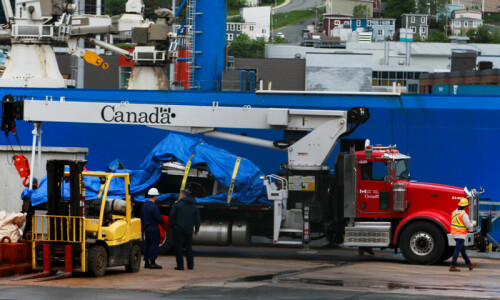
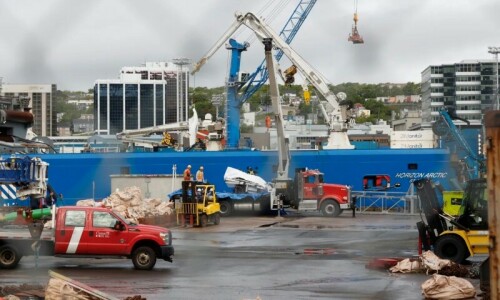
“Marine safety engineers with the Coast Guard’s Marine Board of Investigation (MBI) recovered and transferred remaining Titan submersible debris and evidence from the North Atlantic Ocean seafloor” on October 4, the US Coast Guard said in a statement on Tuesday.
“Additional presumed human remains were carefully recovered from within Titan’s debris and transported for analysis by US medical professionals,” it added.
Some wreckage and presumed human remains were also recovered in late June.
The Coast Guard said it was coordinating with the US National Transportation Safety Board (NTSB) “and other international investigative agencies to schedule a joint evidence review of recovered Titan debris.”
The five men aboard the Titan were British explorer Hamish Harding, French submarine expert Paul-Henri Nargeolet, Pakistani-British tycoon Shahzada Dawood and his son Suleman, and Stockton Rush, CEO of the sub’s operator OceanGate Expeditions.
A debris field was found 1,600 feet (500 meters) from the bow of the Titanic, which sits 400 miles off the coast of Newfoundland.
The victims were presumed to have died instantly when the Titan, about the size of an SUV car, imploded under the crushing pressure of the North Atlantic at a depth of more than two miles (nearly four kilometres).
The US Coast Guard and Canadian authorities have launched probes into the cause of the tragedy, which occurred after the Titan lost contact about an hour and 45 minutes after plunging into the ocean.
According to a BBC report, a US court documents uncovered after the implosion indicated that CEO OceanGate ignored safety warnings about the submersible.
The hull of the Titan was made from carbon fibre, with titanium end plates and a small window at one end. Carbon fibre is cheaper than titanium or steel and is extremely strong, but it is a largely untested and unusual material for deep sea dives with human passengers, the report said.
The Coast Guard said a public hearing will be held at a future date, BBC reported.
Published in Dawn, October 12th, 2023