THE budget for FY24 unveiled by the government yesterday was prepared amid unprecedented domestic and global uncertainties, with the economy representing a classic case of stagflation marked by almost zero per cent growth, rising unemployment and soaring price inflation.
That said, many expected the budget to outline a well-thought-out strategy to steer the country out of its current crisis, and put it on the path of economic stability and debt sustainability.
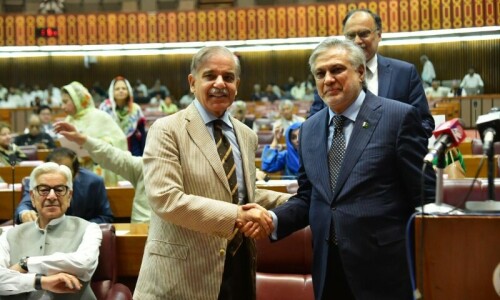
However, by overlooking certain measures, such as the documentation of the economy and privatising loss-making SOEs, the government has failed to turn a crisis into an opportunity. Finance Minister Ishaq Dar’s budget speech contained not a single word on how the government planned to pull the country out of the current economic morass.
At best, the budget seeks to balance some populist measures, ahead of the next elections, with tough conditions imposed by the IMF for the resumption of the soon-to-end $6.5bn bailout loan programme.
The government wants to secure part of the $2.5bn undisbursed funds, so that the markets can overcome their nervousness about a possible sovereign default. But will it work?
For starters, it is a fiscally irresponsible budget: no effort has been made to curtail the budget deficit. The fiscal plan that the budget has laid out will lead to the accumulation of more debt, even if the targets — tax and non-tax revenue of Rs12.16tr and GDP growth of 3.5pc — are met, despite the odds.
The expansionary nature of the budget targets a massive fiscal deficit of 6.5pc of GDP against the IMF’s programme projection of 4pc for the next year on the back of large development allocations of Rs2.7tr, energy and other subsidies of Rs1.07tr, a 30-35pc increase in government employees’ salaries, and similar expenditure that could have been eliminated or significantly reduced.
That is going to be problematic in Islamabad’s ongoing talks with the IMF. If the lender doesn’t agree on these numbers, the government will soon have to revise its spending targets. Nor does it explain how the government intends to meet the other crucial IMF condition of commitments to cover the financing gap of $6bn.
If the revival of the IMF funding is the only objective, Mr Dar has not been able to give the lender a credible plan either. We are living in challenging times that require a paradigm shift in how we manage our debt-ridden economy. There are no easy fixes.
If the government thinks it can revive the competitiveness of a broken economy and stimulate growth through large but borrowed development stimulus and the distribution of freebies, it is mistaken.
Pakistan needs to make some tough choices to get out of the present crisis. So far the government has shown no inclination of taking those difficult but necessary decisions.
Published in Dawn, June 10th, 2023