The World Health Organization declared that mpox no longer constitutes a global health emergency on Thursday, almost exactly a year after the disease formerly known as monkeypox started spreading across the world.
Following falling cases numbers, WHO chief Tedros Adhanom Ghebreyesus told an online press conference he was “pleased to declare” that he had accepted the advice of the UN agency’s emergency committee on mpox to lift its highest level of alarm.
The announcement came just a week after the WHO said that Covid also no longer constitutes a public health emergency of international concern (PHEIC).
“While the emergencies of mpox and Covid-19 are both over, the threat of resurgent waves remains for both. Both viruses continue to circulate and both continue to kill,” Tedros said.
“Mpox continues to pose significant public health challenges that need a robust, proactive and sustainable response,” he added, calling on countries to remain vigilant.
Though long present in parts of Central and West Africa, in May last year cases of mpox started emerging in Europe, North America than elsewhere, mostly among men who have sex with men.
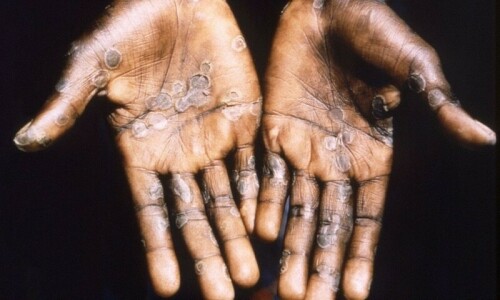
The WHO declared mpox was a PHEIC in July. But the number of people infected with the disease — which causes fever, muscular aches and large boil-like skin lesions — has consistently fallen since.
More than 87,000 cases and 140 deaths have been reported from 111 countries during the global outbreak, according to a WHO count.
But almost 90 per cent fewer cases were recorded over the last three months compared to the previous three-month period, Tedros said.
“While we welcome the downward trend of Mpox cases globally, the virus continues to affect communities in all regions, including in Africa, where transmission is still not well understood,” he said.
After the status was lifted for Covid and mpox, there is now just one WHO-declared PHEIC — for poliovirus, which was declared in May 2014.