0
0

PARIS: Devastating climate impacts are hitting faster than expected as the world teeters on reaching the 1.5 degree Celsius warming limit in a little over a decade, the UN said on Monday.
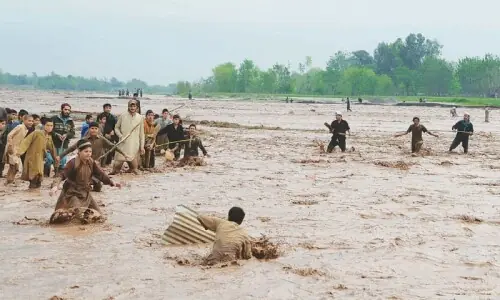
Temperatures seen in recent years have stoked destructive storms and flooding, crop-wilting heatwaves, and deadly droughts. But generations to come will look back on the hottest years of the 2020s as relatively cool, even if planet-warming fossil fuel emissions drop quickly, the UN’s climate advisory panel said in a key report.
The 36-page “summary for policymakers,” a synthesis of six major reports since 2018 from the Intergovernmental Panel on Climate Change (IPCC), is a brutal reminder that while humanity has the tools to prevent climate catastrophe, it is still not putting them to use.
The world is currently set to reach 1.5C above pre-industrial levels, considered a safer limit to warming, in the early 2030s, which will ratchet up the severity of impacts in the near future. But it’s not too late to turn things around, the head of the IPCC said, describing the report as a “message of hope.”
“We have know-how, technology, tools, and financial resources — everything needed to overcome the climate problems we have known about for so long,” Hoesung Lee said in a video interview. “What’s lacking at this point is a strong political will to resolve this issue once and for all.”
In response to the report, UN Secretary General Antonio Guterres said wealthy countries aiming for carbon neutrality in 2050 or beyond should speed up their goal to as close as possible to 2040 in order to “defuse the climate time bomb. “ “Humanity is on thin ice, and that ice is melting fast,” the United Nations chief said in a video message as the IPCC experts group issued its latest report, which he likened to “a survival guide for humanity.” The IPCC made clear that the benefits to society and the world economy of capping global warming under two degrees Celsius outweighed economic costs.
This is true even without accounting for all the rewards of avoiding climate damage, which range from the health impacts of air pollution to reduced crop yields.
Published in Dawn, March 21st, 2023