Berlin strikes defiant tone as Trump-Merz sparring continues
• US president tells German chancellor to stop interfering with Iran, focus on Ukraine war
• German foreign minister says country is prepared for potential US troop reduction
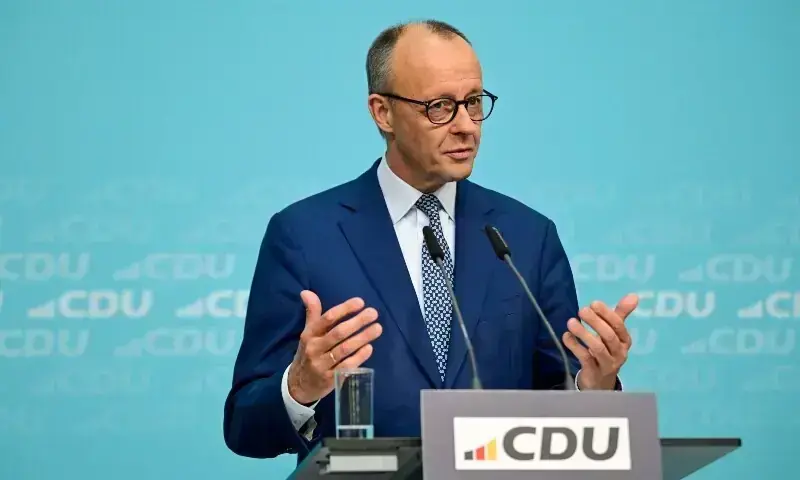
WASHINGTON: US President Donald Trump criticised German Chancellor Friedrich Merz on Thursday, saying he should focus on trying to end the Russia-Ukraine war and spend “less time on interfering” with efforts to tackle “the Iran nuclear threat”.
Trump’s second broadside of the week against Merz came a day after he said he was considering the redeployment of some of the tens of thousands of US troops stationed in Germany, a key Nato ally.
The US president has been sparring with Merz over the war in Iran in recent days. On Tuesday, he said Merz didn’t know what he was talking about after the German leader said the Iranians were humiliating the US in talks to end the two-month-old war.
“The Chancellor of Germany should spend more time on ending the war with Russia/Ukraine (Where he has been totally ineffective!), and fixing his broken Country, especially Immigration and Energy, and less time on interfering with those that are getting rid of the Iran Nuclear threat, thereby making the World, including Germany, a safer place!” Trump said in a post on his Truth Social platform.
In response to Trump’s threat of troop reduction, Germany’s foreign minister said Berlin was “prepared” for any such move.
“We are prepared for that. We are discussing it closely and in a spirit of trust in all Nato bodies, and we are expecting decisions from the Americans about this,” Johann Wadephul said during a visit to Morocco.
“We are doing this in our shared transatlantic interest. We are doing it with mutual respect and a fair sharing of burdens,” he added.
While saying he was “relaxed” about the idea of fewer US troops in Germany, Wadephul, the foreign minister, said that large American bases in Germany are “not up for discussion at all”.
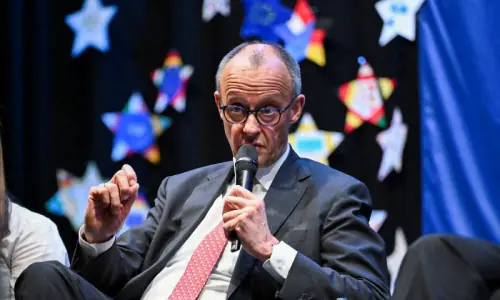
Meanwhile Chancellor Merz insisted that while Germany had enough oil and gas supplies, his government was doing everything possible diplomatically to open the Strait of Hormuz due to global shortages.
“We still have (...) enough oil and gas supplies. Relatively little of the supply for Europe passes through the Strait of Hormuz. The majority comes from other sources,” he told a town hall event in the northern town of Salzwedel on Thursday.
“Nevertheless, the shortages on the global markets are, of course, also an important signal for price developments here. Therefore, everything is aimed, including my own efforts, at making every possible contribution to reopening the Strait of Hormuz.”
Published in Dawn, May 1st, 2026