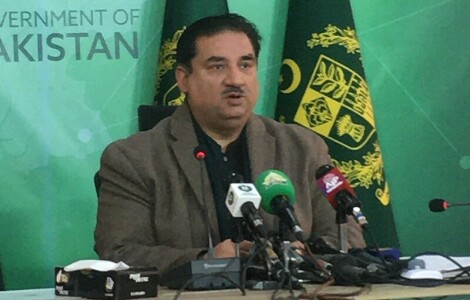
On Jan 23, at 7.34 am, the entire national grid system collapsed and the whole of Pakistan slipped into premature darkness. All Indian Prime Minister Modi needed to invade Pakistan was a torch.
Last year, Pakistan had an installed power generation capacity of 43,775 MW. Of this, 26,683 MW was thermal (the domain of the private sector), 10,635 MW hydroelectric (controlled by Wapda), 1,838 MW wind, 530 MW solar, 369 MW bagasse and 3,620 MW nuclear. So, how does a nuclear power run short of power?
One is reminded of the jibe made in 1945 by the British Labour leader Aneurin Bevin: “This island is made mainly of coal and surrounded by fish. Only an organising genius could produce a shortage of coal and fish at the same time.”
Who were the geniuses whom Pakistanis, fumbling in Monday’s daylight darkness, could and should hold responsible for the current energy shortage?
The country has had no end of energy policies.
The country has had no end of energy policies. The one that has had the most lasting and damaging effect has been the energy policy of 1994. It advocated the “large-scale induction of private sector” in power development, until then the sole prerogative of Wapda. In effect, Wapda, with its track record of installing 13,000 MW of energy capacity and laying 29,000 miles of transmission lines, could no longer be trusted with the expansion of the energy sector. The World Bank, once Wapda’s friendliest support, became its fiercest critic.
Wapda lost control of thermal power and was left with hydel dams. These produced electricity cheaper but found no favour with commission agents.
A triumvirate of three government functionaries — Shahid Hasan Khan, Tanveer Azhar and M. Salman Faruqui — hastened the induction of the private sector.
The policy introduced the Bulk Power Tariff of 6.5 cents per kilowatt hour for the first 10 years of the project (to cover the period of indebtedness of each project), reducing to 5.9 cents for its remainder. The BPT consisted of (1) an energy price to cover fuel cost and variable operating costs, and (2) a capacity price to cover debt repayment obligations, fixed operating costs, maintenance costs and return on equity (then assumed to average 17 per cent). Payment of BPT and repatriation abroad of dividends stood guaranteed.
At the behest of the World Bank, Wapda’s transmission and distribution system was unbundled, creating 12 local distribution companies (Discos), providing employment to military retirees. The transmission system was placed under the National Transmission & Despatch Company. Its losses from defective transmission and active theft, 21pc in 1997-98, now oscillate (depending on the region of the Disco) from 10pc to 40pc.
The simplicity of Wapda’s monolithic structure spawned a plethora of regulatory bodies, among them the National Electric Power Regulatory Authority and the Pakistan Nuclear Regulatory Authority. Responsibility became diffused; accountability shrunk into a Houdini-hole of escapism.
Today, the country finds itself saddled with a mounting circular debt. In 2013, that debt stood at Rs450 billion. In 2020, it increased to Rs2.3 trillion. Today, the total circular debt has spiked to an alarming level of Rs4.2tr, rising by about Rs129bn per year.
The circular debt is fomented, according to a recent report, by the high cost of power generation, delays in the tariff determination, inordinately high transmission and distribution losses, poor revenue collection by the Discos, partial (often delayed) tariff differential subsidies payable by the government to Discos and K-Electric, high financial costs, and expensive late-payment penalty charges on payables.
It is a familiar litany of recurring causes. Their solutions are not in the hands of the suffering consumers, who have become inured to living in the “dark, dark, dark, amid the blaze of noon”.
In October 2021, the government issued a Pakistan Energy Demand Forecast (2021-2030), focusing on Integrated Energy Planning for Sustainable Development (IEP). The IEP envisions “an open, competitive private sector-led energy sector providing reliable, least-cost energy supplies for meeting anticipated demand growth”. Its goal “is to build the capacity of GoP institutions and relevant stakeholders for analysis-based decision-making”.
The IEP forecasts primary energy demand for electricity to be 28,300 MW in 2025 and 33,600 MW in 2030. Oil demand is likely to be 180 million barrels in 2025 and 205m barrels in 2030 including oil-based power generation requirements.
Planners in the finance ministry may use these forecasts to determine foreign exchange outflows. The governments of Saudi Arabia, Qatar and Russia might like to factor these into their long-term plans.
Meanwhile, Pakistanis should stock up on copies of the IEP report. They will need it to burn it for fuel every winter, until 2030.
The writer is an author.
Published in Dawn, January 26th, 2023