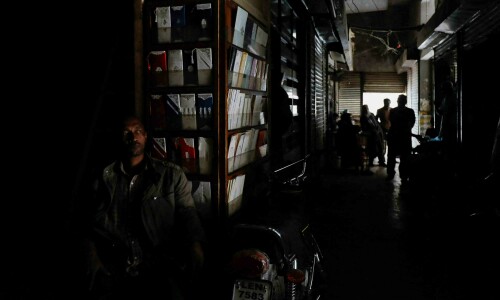
There is much that needs to be unpacked from the catastrophic failure of the national energy transmission system early Monday, which left the entire country without electricity just as it was waking up for a new workweek. It took more than 22 hours for the system to be fully restored, and even then, Karachi, Lahore and Quetta were hit with new power blackouts early Tuesday as well.
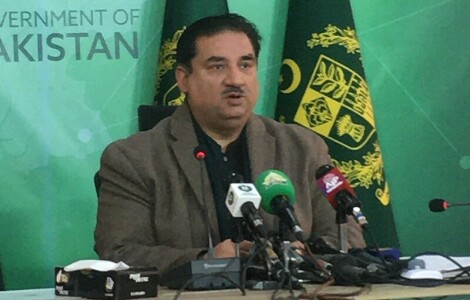
Minister for Energy Khurram Dastgir later revealed that coal and nuclear plants generating a combined 10,100 MW of electricity would take another two to three days to come back online. The minister said ‘limited load management’ — a euphemism for load-shedding — would be carried out for non-industrial consumers to manage the shortfall.
It is a symptom of our stalled progress and development that nationwide power blackouts are now considered par for the course. As has become the protocol, strict notices have been taken by the higher-ups, inquiries ordered and assurances given that the authorities have a handle on the situation. Whatever they say, however, those responsible clearly lack the capacity to deal with crises of this magnitude.
It is shocking to learn that the National Transmission and Despatch Company, which is responsible for the national grid, is currently without a chief executive. It is doubly appalling that, over the last 13 years, bureaucratic and political interference has prevented those with the relevant technical qualifications from holding that post for more than a few months.
Will there be any real accountability or effort to fix the critical weaknesses in the national power transmission system? The first time a nationwide power blackout occurred ought to have been the last time something like it happened, yet we’ve had eight such incidents in the past nine years. One particular section of the national transmission corridor has been identified as being responsible for most of the recent power breakdowns.
It defies understanding why the issues plaguing it continue to remain unaddressed. A nation of more than 240m cannot remain at the mercy of such reckless incompetence. Electricity is the country’s lifeblood; without it, the entire modern economy grinds to a halt. Even the communication infrastructure collapses, as was seen when various telecom services started failing on Monday. The energy transmission infrastructure needs to be treated with more seriousness and its weaknesses removed as a matter of national priority.
Published in Dawn, January 25th, 2023