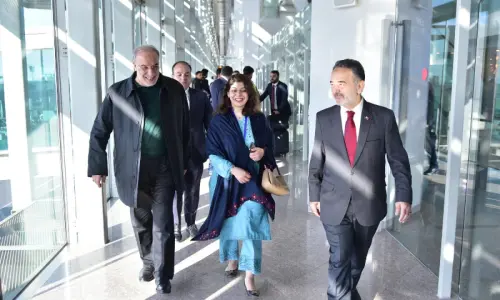
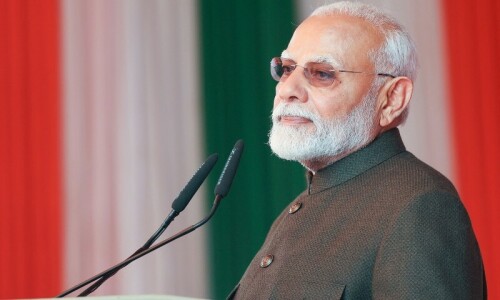
India has invited Pakistan’s foreign minister to a meeting of the Shanghai Co-operation Organisation (SCO) that it is hosting in May, Indian media reported on Wednesday, signalling a possible thaw in relations between the nuclear-armed rivals.
The invitation came days after Prime Minister Shehbaz Sharif called for talks with India over all outstanding issues, including India-occupied Jammu and Kashmir (IIOJK), before clarifying that talks cannot take place until the “illegal actions of August 5, 2019” are reversed.
Just a month ago, there were street protests in India over Foreign Minister Bilawal Bhutto Zardari’s remarks calling Indian Prime Minister Narendra Modi the “butcher of Gujarat” on the sidelines of the United Nations Security Council meeting. India called Bilawal’s comments “uncivilised”.
Foreign ministry spokespersons for the two countries did not immediately respond to requests from Reuters for comment on the media reports that Bilawal had been invited to the SCO foreign ministers meeting being hosted in Goa.
According to the Indian Express newspaper, the invitation from Indian External Affairs Minister S Jaishankar has been delivered by the Indian High Commission in Islamabad. It added that the “dates being looked at, as of now, are May 4 and 5”.
If Pakistan accepts, Bilawal would be its first foreign minister to visit India after a gap of nearly 12 years. The last foreign minister to visit India was Hina Rabbani Khar in July 2011, Indian Express said.
The SCO comprises Pakistan, China, India, Russia and Kyrgyzstan, as well as Central Asian countries with whom Pakistan has recently been strengthening foreign ties — namely Kazakhstan, Tajikistan and Uzbekistan.
The newspaper also reported an Indian “top official” saying: “In keeping with its ‘Neighbourhood First Policy’, India desires normal neighbourly relations with Pakistan. India’s consistent position is that issues, if any, between India and Pakistan should be resolved bilaterally and peacefully, in an atmosphere free of terror and violence.
Pakistan and India have fought three wars since independence from British rule in 1947. The divided Himalayan region of IIOJK was the root cause of two of those wars.
Tensions flared again in late 2019 when India unilaterally revoked the autonomous status of occupied Kashmir. Shehbaz said New Delhi’s actions resulted in “flagrant” human rights violations.
Official talks between the two countries have been suspended since then, though there have been some attempts to resume negotiations through backdoor diplomacy.