THE fact that elected representatives will have some oversight over peace talks with the banned TTP should help reduce the opacity surrounding the parleys.
While the security establishment had been leading the effort since last year, with the Afghan Taliban playing the role of facilitators, there had been growing demands, particularly from the PPP, for more civilian involvement in the process.
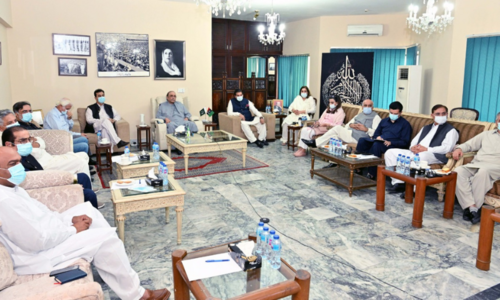
In this regard, a marathon session was held in Islamabad on Tuesday with the military’s top brass briefing lawmakers and other civilian stakeholders about the peace process under the aegis of the Parliamentary Committee on National Security. Some positive outcomes of the huddle were the formation of a parliamentary oversight committee that would monitor the talks, while it was decided that erstwhile Fata’s merger with KP, respect for the Constitution and disarming of the TTP were Pakistan’s ‘red lines’. There was a general consensus to continue the talks, though PTM leader and MNA Mohsin Dawar reportedly opposed the parleys.
Read: On again, off again — a timeline of govt-TTP talks
While involving parliament is definitely a step forward, much still remains unknown and unanswered about any potential peace deal with the TTP.
For instance, will the militant group, known for savage violence and waging war on Pakistan, really change its bloodthirsty ways and accept the rule of law? Moreover, the TTP is an umbrella group of several militant factions. What guarantee is there that if the outfit’s leadership agrees to the state’s demands, splinter groups will not form and continue the violent ‘struggle’? Also, the TTP is reportedly demanding ‘compensation’ for the ‘damage’ it has suffered. If anything, the militants must be made to pay for taking around 70,000 military and civilian lives through ruthless terrorist attacks in Pakistan. As for an amnesty demanded by the militants, perhaps this can be considered for low-level fighters; however, the masterminds responsible for the APS massacre and other crimes need to be brought to justice.
Read: Families of APS attack victims oppose amnesty to TTP
The parliamentary committee needs to consider these factors as it continues to monitor the peace process.
While the state, particularly the security establishment, seems to be keen to talk to the TTP, such desire for dialogue is missing when it comes to the PTM, which is a peaceful movement for civic and political rights.
The bottom line is that the state should not negotiate with terrorists from a position of weakness. The negotiators must also keep the fate of past, doomed peace agreements with the militants in mind. Put plainly, it is very difficult to trust the TTP.
One point reportedly raised during Tuesday’s huddle is that the group could team up with IS-Khorasan to target Pakistan if talks fail. If this assessment is true, then there is all the more reason for the administration to be even more wary of the TTP for the militants just might use a peace deal as a ruse to strengthen their network, and create more havoc.
Published in Dawn, July 7th, 2022