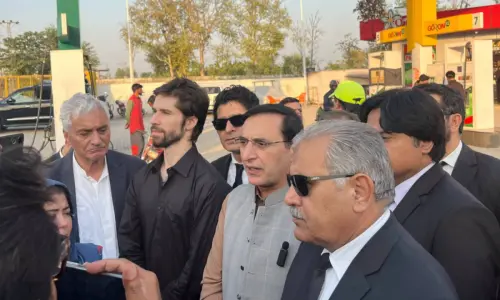
PTI leader Fawad Chaudhry on Monday rejected newly elected Prime Minister Shehbaz Sharif's call to investigate the contents of a cable that allegedly contains details of a threat made by the United States against former premier Imran Khan's government.
According to Khan, the cable, which he first spoke of and brandished at a public rally on March 27, carried details of the ambassador's meeting with Assistant Secretary of State for South and Central Asia Affairs Donald Lu in which the latter allegedly threatened Pakistan. Khan and his party linked the purported threat with the no-trust move against him in the National Assembly that led to his ouster from the top office.
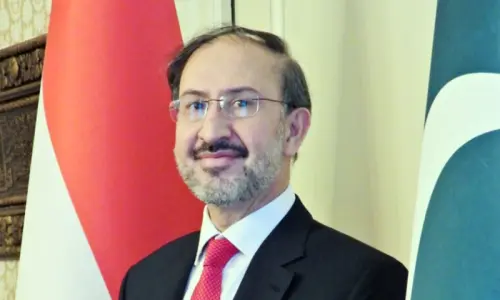
Majeed, in the cable, reportedly said Lu warned that Khan’s continuation as the prime minister would have repercussions for bilateral relations. The US, Khan claims, was annoyed with his "independent foreign policy" and visit to Moscow.
Following his successful election as the prime minister earlier today, Shehbaz announced that he would be making arrangements for an in-camera briefing of the Parliamentary Committee on National Security to discuss and determine the authenticity of the cable and the session would be attended by the military leadership, Inter-Services Intelligence director general, foreign secretary and the ambassador who sent the letter.
Reacting to the prime minister's offer, Chaudhry decried it as an "ugly attempt" by the new premier to provide a National Reconciliation Ordinance-type deal to himself and said the PTI rejected it.
He said the Supreme Court should form an independent commission to investigate the matter, with the probe body's head being a person who no one could object to.

Earlier today, the Islamabad High Court dismissed a petition that sought an investigation into the contents of the cable. It said that making a cable that had been sent by a Pakistani diplomat "controversial and the subject of litigation" was against the public and state's interests.
The court observed in its order that it was "settled law" that matters relating to the country's foreign affairs were "extremely sensitive and therefore not justiciable". It said the assertions were "vague" and not supported by any credible material that merited making the diplomatic cable a subject of litigation.