Senate body clears corporal punishment bill



ISLAMABAD: A parliamentary body on Wednesday cleared “The Islamabad Capital Prohibition of Corporal Punishment Bill 2021”, which bans aggressive behaviour with children not only in educational institutions but in workplaces as well.
Senate standing Committee on Human Rights, however, made some amendments to the bill.
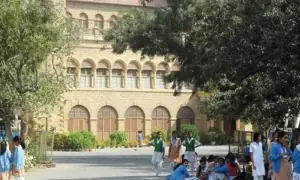
The bill protects children against corporal punishment by any person, at workplace, in all types of educational institutions, including formal, non-formal, and religious both public and private, child care institutions including foster care and rehabilitation centres as well as juvenile justice system.
Except for the two guests, invited by the standing committee, for their opinion in light of religion, the entire committee approved the bill.
PML-N Senator Prof Sajid Mir, who was invited to speak in light of religious context on the matter, gave examples from Hadith that teachers should not be put in the spot for ensuring discipline. “Corporal punishment should not be completely abolished,” said Prof Sajid Mir. He also contended that punishments proposed in the draft bill were not commensurate with offences.
Similarly Jamiat Ulema-i-Islam-Pakistan (JUI-P) Senator Kamran Murtaza, also argued that some strictness was necessary. “JUI-P believes in reforms rather than punishments. We feel that prohibiting corporal punishment would worsen the moral deterioration in the society and there will be room for abuse,” he said.
He proposed a mechanism that a committee comprising head of the institution, parents and the accused, should decide in two days, the case when corporal punishment was administered, to ascertain facts.
He also proposed withholding increments and promotions, financial penalty, compulsory retirement, and dismissal, depending on the seriousness of the offence committed.
However, the mover of the bill Senator Saadia Abbasi contended that physicians, psychologists and educationists around the globe had pointed out towards negative effects of physical punishment of children on their mental and cognitive development.
Countless studies have proved that corporal punishment and uncongenial learning environment create a number of psycho-social imbalances in the personalities of children including aggression, she said.
She said experts had consensus that physical punishment could have adverse consequences on the child’s health, particularly their behaviour and emotional wellbeing.
“One of the reasons attributed to the higher drop-out rate in schools and low learning outcomes of students was physical punishment and castigation of pupils by the teachers,” she said.
In accordance with United Nations Convention on Rights of Child, 1989, ratified by Pakistan, it was now the responsibility of the state to protect children from all forms of physical and mental violence and maltreatment. “Therefore corporal punishment should be banned and declared an offense through an act,” she emphasized.
Nonetheless, the committee proceeded with amendments in definitions, deletions and toning down punishments.
Some expressions and terminologies such as “humiliation” and “degrading” treatment, were deleted after Chairman of the committee Senator Walid Iqbal, asserted that they were too broad and vague.
The committee felt that the definition of “corporal” punishment incorporated all such as an act to cause some degree of pain or discomfort, involving smacking, slapping, spanking, a child with hand or with a whip or stick, including kicking, shaking or throwing a child, scratching, pinching, biting, pulling hair or boxing ears.
Forcing a child to stay in uncomfortable positions, burning, scalding or forced ingestion for example washing a child’s mouth with soap or forcing him to swallow hot spices, including mental abuse or any other kind of punishment even assault.
The members also believed that disqualification of a teacher for future employments was too excessive and abolished.
The draft will now be discussed in the House for further deliberations.
Published in Dawn, July 29th, 2021