THE prospects are grim and potentially bloody. Foreign Minister Shah Mahmood Qureshi and National Security Adviser Dr Moeed Yusuf have both warned that the situation in Afghanistan is highly unstable and the fallout can affect Pakistan. In a detailed briefing at the Senate Foreign Affairs Committee on Friday, the two officials spelt out the severe challenges faced by Pakistan in the shape of refugees and militancy from across the border.
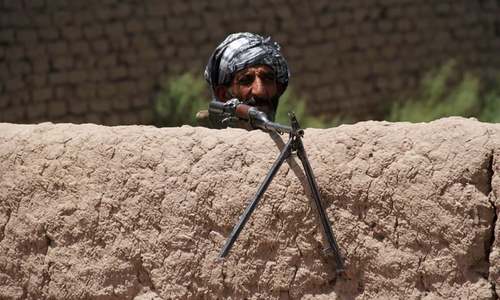
The Afghan Taliban are swiftly capturing territory in the north and south of Kabul and the Afghan National Army has failed so far to put up any significant resistance. US President Joe Biden in a speech earlier this week reiterated that the withdrawal of American forces will be completed by the end of August except for those troops left behind for the security of the US embassy in Kabul. Having faced such a situation before, and suffered the consequences of faulty decisions, Pakistan must now take timely and decisive action to overcome the challenge presented by the volatile situation across the border.
The Taliban appear unwilling for a negotiated settlement at this point — victory on the battlefield being only a matter of time — so Pakistan has limited options to influence what happens inside Afghanistan. This is not for any lack of trying. Pakistan has played perhaps the most proactive role in pushing the Taliban towards a power-sharing arrangement but the situation on the ground has generated its own momentum towards a conflict. Pakistan’s focus therefore should be on how to minimise the toxic fallout from Afghanistan as it inches closer to a full-blown civil war.
Read: The new Afghanistan challenge
The conflict has already began to dislocate people and many are heading for the borders. Pakistani officials have yet to announce a policy, though many including the interior minister have said they are seriously considering the ‘Iranian model’ of restricting refugees to border camps and not allowing them to blend in with the local population. Time is running out and the government should make a decision without delay and announce it to the world. Pakistan cannot, despite all its best intentions, bear the load of a large influx of refugees and it should let the international community know this in clear terms.
Linked to this is the resurgence of militancy and terrorism inside Pakistan. Dr Yusuf has acknowledged the danger that terrorists from the banned TTP and other groups could infiltrate Pakistan along with the refugees and it would be difficult for authorities to differentiate between them. Although the Taliban have stated they would not allow their territory to be used for terrorism against Pakistan, it is vital that Pakistani authorities drive this point home with them with greater emphasis. At the same time, we need to enhance our counterterrorism and law-enforcement capabilities to tackle this renewed threat that is building up across the border. Tough days lie ahead.
Published in Dawn, July 12th, 2021