0
0

KARACHI, Sept 22: Creation of an enlightened, progressive and just society that respects rights of all citizens, including women and minorities, and recognises supremacy of law and the constitution is essential for preventing the Pakistani society from further degeneration.
This was stressed by participants of the two-day National Conference on Ethics, Values and Social Transformation: Perspectives from Pakistan, which was organized here on Thursday by the International Relations Department of the University of Karachi in collaboration with Unesco.
Disagreement on Kalabagh Dam, National Finance Commission Award and erosion of constitutional supremacy was considered major factors responsible for fragmentation of the society and social injustices.
The conference, being held at a time when the conflict generating issues are playing havoc with the global aspirations to promote a more just, peaceful and harmonious social order, was inaugurated by the Pro-Vice-Chancellor of the Karachi University Prof Akhlaq Ahmad.
In the first working session, renowned economist Dr Kaiser Bengali expressed concern over prevailing situation in the society and called for the need for transforming the society into one based on rights. He also called for a social contract providing rule of law under a democratic order and supremacy of law.
He said that Pakistani society, at the moment, was fragmenting and most of its segments were still devoid of modern times facilities. Offences against women are rife, people die after consuming tap water and there is a lack of health care and other facilities, according to him.
Dr Bengali also contested the government’s claim of economic independence and prosperity, and maintained that the country was still having the internal outstanding debt of more than Rs200 trillion while foreign outstanding debt was over $35 billion.
The conflicts within, including those relating to Kalabagh Dam and NFC Award issues, had not been resolved. The issues like these ones had unleashed centrifugal tendencies and were widening the gulf between the Centre and provinces. As a result of the government’s policies, militarization had increased under the military set-up which had deliberately strengthened the biradari system. It was also affecting the community development programmes, the economist observed.
In his view, internal factors appeared many, ranging from feudalism and tribalism to inequality and poverty, and to an overall social environment. Together they have created a political environment where the state has no direct interest in social development. This is indicative from the low and declining levels of public expenditure towards social development, reflecting the low priority attached to social development in the state’s overall objectives.
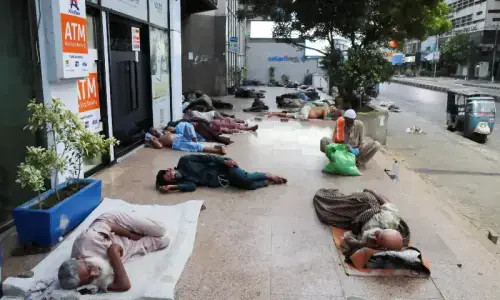
Dr Bengali claimed that social inequality had reached a point where Pakistan had become a country having two entities — one depicting the elite and the other the poor — and the elite had a little interest in how the poor lived.
He dealt with some of the conceptual issues in social development, arguing that “social development is not just about aggregations of literacy and health statistics, but about the consensus that society develops and builds about the kind of entity it wants to have and how it goes about achieving the stated objectives.”
Dr Arifa Farid presented a paper on Liberalism: Dialectic and/or Rhetoric: Its Impact on Transforming Islamic Society. In this context, she also discussed the impact of liberalism in Pakistani society, and said that it had profound impact on its Islamic cultural moorings.
Dr Mubarak Ali in his paper on Ethical and Moral Values and Social Transformation: Historical Narrative argued that values kept on changing with the development of society.
“Power shapes and reshapes, and constructs and reconstructs ethical and moral values according to its needs. It is debatable in history that whether ethical and moral values can transform social change or they just play a subordinate role to serve political and economic powers,” he said, adding that it was wrong to assume that only ethical and moral forces could bring any change in society.
But Prof Syed Sikander Mehdi did not agree with his contention in his presentation, titled Social Transformation Through a Culture of Peace. He argued that images of contemporary developing societies, as projected by international print and electronic media were scaring. The profiles of southern countries issued by several UN bodies, leading NGOs and prestigious think-tanks from time to time almost invariably portrayed them as violent, unjust, militarized and failing. Even the national media of the developing world appeared generally overflowed with stories of diverse kinds of citizens’ vulnerabilities, victimizations and sufferings. The art and craft of governance in such societies were equally discomforting. What was most tragic was the fact that violence had been accepted in such societies as a way of life, he observed.
In many of these societies, flagrant violation of the most basic human rights, widespread poverty and denial of democracy and justice at all levels had eventually resulted in the dispossession and dethronement of citizens, he pointed out.
“In this age of globalization and geo-economics, national security state is fast emerging as national economy state. While crime continues to be committed in the name of security, graver crime is now being committed in the name of progress. Indeed, ethics and values have a little space in the theology of development today and the transition of the state from warrior to corporate is no less menacing.”
Given the state of affairs, social transformation through the normal functioning of the state seemed very unlikely, he viewed, and added that a wholesale change through the uprising of the masses might not deliver the desired result, as it couldn’t do in many developing societies.
Earlier, in the inaugural session, chairperson of the IR Department Dr Khalida Ghaus presented welcome address. Prof Sikandar Mehdi explained aims and objectives of the conference in the global and national context.
Prof Akhlaq Ahmad maintained that cyber age had caused a paradigm shift in ethics and morality. He also referred to the Pakistan-India peace process and dividends of peace, privatization as a mode of transformation, contacts with Israel, and war on terror.