No talks with India before curfew in occupied Kashmir is lifted, says FM Qureshi



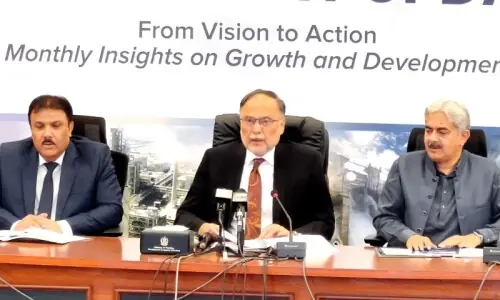
Foreign Minister Shah Mehmood Qureshi has said that Pakistan could hold talks with India over the issue of occupied Kashmir if New Delhi meets certain conditions, including allowing him to meet with the Kashmiri leadership.
In an exclusive interview with BBC Urdu, the minister said Pakistan had no objection to holding bilateral talks with India and that it would also welcome mediation by a third party.
He said the talks could take place if: India lifts the crippling curfew that has been imposed in occupied Kashmir for nearly four weeks, restores the rights of local residents, releases the entire imprisoned Kashmiri leadership and allows him (Qureshi) to meet with the Kashmiri leadership.
See: How India is seeking to portray 'calm, normalcy' in locked-down occupied Kashmir
But he added as a caveat that while Pakistan has never shied away from talks, he did not see a favourable atmosphere for negotiations from the Indian side considering New Delhi's oppression of the Kashmiri people.
"There are three disputes to this conflict: India, Pakistan and Kashmir," Qureshi told the BBC. "I think if India is serious it should first set Kashmiri leaders free and allow me to meet the Kashmiri leadership and hold consultations.
"I will have to assess their (Kashmiri leaders') emotions. [We] cannot come to the table for talks by trampling the sentiments of Kashmiris."
Examine: Shimla scrapped: The Modi government rejects the very idea of talks
Ruling out war, the foreign minister stressed that Pakistan has never adopted an aggressive policy and always prioritised peace. "(A war) will cause loss of people and the world will be affected by it, so war is not an option," he said.
He added, however, that the armed forces and people of Pakistan are ready if war is "imposed" on Pakistan like on February 26 earlier this year.
On August 5, the Hindu nationalist government of Indian Prime Minister Narendra Modi stripped Kashmiris of the special autonomy they had for seven decades through a rushed presidential order. An indefinite curfew was imposed in occupied Kashmir and elected leaders were put under house arrest. The clampdown is now on its 27th day.
Pakistan angrily slammed New Delhi's moves, expelling India's ambassador, suspending bilateral trade, and taking the matter to the United Nations Security Council.
Foreign Minister Qureshi's latest comments echo that of Prime Minister Imran Khan, who wrote in an op-ed for The New York Times on Friday that dialogue with India can start only when it reverses its "illegal annexation of Kashmir, ends the curfew and lockdown, and withdraws its troops to the barracks".
"With the nuclear shadow hovering over South Asia, we realise that Pakistan and India have to move out of a zero-sum mind-set to begin dialogue on Kashmir, various strategic matters and trade. On Kashmir, the dialogue must include all stakeholders, especially the Kashmiris," the premier wrote.
'Nation should not be saddened'
Qureshi during the interview said it was due to Pakistan's diplomatic efforts that the Kashmir issue had reappeared on the world's "central stage" after years.
Playing down the notion that Gulf countries had not effectively raised their voice for Kashmir, and the giving of awards to Indian Prime Minister Modi by the United Arab Emirates and Bahrain, the minister said although the Gulf nations have business and bilateral ties with India, their position on the Kashmir issue is clear.
He recalled that the Arab countries had come to Pakistan's rescue in the recent past when its economy was under pressure.
"The nation should not forget that Pakistan was about to default. Did the UAE and Saudi Arabia not come for our help at the time?" the minister said, adding that hundreds of thousands of Pakistanis were employed in the two countries who sent their remittances home.
Qureshi said the nation did not need to be saddened because the Gulf countries will support Pakistan's stance on Kashmir once the facts become clear. He also revealed that he would convey the feelings and sentiments of Pakistanis in his conversation with the UAE foreign minister in the near future.