EXTRALEGAL measures to curtail citizens’ freedom of movement are an instrument of state oppression, employed in countries where the right to due process holds no meaning.
The recently discovered blacklist used by the FIA to place people under a temporary 30-day travel ban, clearly falls in this category.
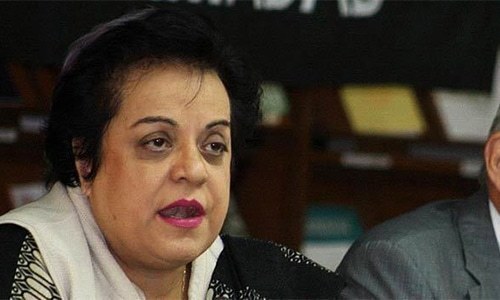
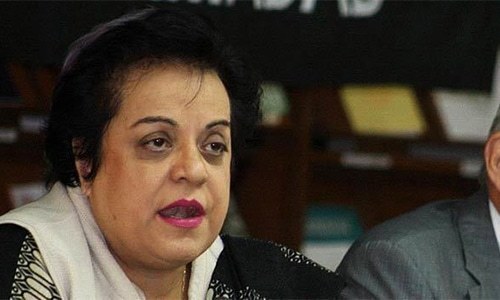
During a parliamentary committee meeting on Tuesday, Human Rights Minister Shireen Mazari rightly assailed the measure as illegal and one that “has no place in a democratic regime”.
Other legislators voiced similar objections, contending it was being employed as a tool to pressure and/ or silence certain politicians and rights activists.
The existence of this opaque repository of individuals — a so-called provisional national identification list — came to light just prior to the 2018 elections.
On July 11, Zulfiqar Bukhari, now special assistant to the prime minister for overseas Pakistanis, was briefly prevented from proceeding to Saudi Arabia to perform umra along with PTI chairman Imran Khan. (It is another matter that a phone call to the right quarters magically cleared the way for Mr Bukhari to board his flight.)
More recently, MNAs Ali Wazir and Mohsin Dawar — both vocal proponents of the PTM — found themselves off-loaded from a Dubai-bound flight for the same reason.
The FIA has defended the blacklist on the grounds that it enables them to promptly prevent suspicious individuals from leaving the country rather than wait for the lengthy procedure of placing names on the Exit Control List to be completed.
That argument has no merit. How can the FIA, which functions under the interior ministry, undertake actions without legal authority, and circumvent the rules formulated to implement an act of law? The correct course of action is for the relevant law itself to be amended and streamlined.
However, modus operandi is not the only problem. The ECL itself is a much-abused instrument. Although the primary objective of the Exit from Pakistan (Control) Ordinance, 1981 — promulgated by Gen Zia — is to prevent the flight of those having allegedly committed major financial fraud, it is often used indiscriminately to harass political opponents, dissidents and even journalists, or to settle personal vendettas.
In 2015, then interior minister Chaudhry Nisar Ali Khan revealed there were over 8,000 names on the ECL, many dating back to 1985 and, to his credit, oversaw the deletion of nearly 5,000 of these.
Of late, there has been an increased recourse to this mechanism: among those who have recently found themselves placed on the ECL is Pakhtun rights activist Gulalai Ismail, whose views run counter to those that are currently in favour.
There must be greater transparency in the application of this law. Senator Raza Rabbani last year proposed an amendment that would bind the government to convey within 24 hours to the individual concerned its reasons for placing his or her name on the ECL.
There is no better time than the present to undertake this exercise.
Published in Dawn, January 25th, 2019