Bahrain’s opposition chief gets life in jail over Qatar spy case
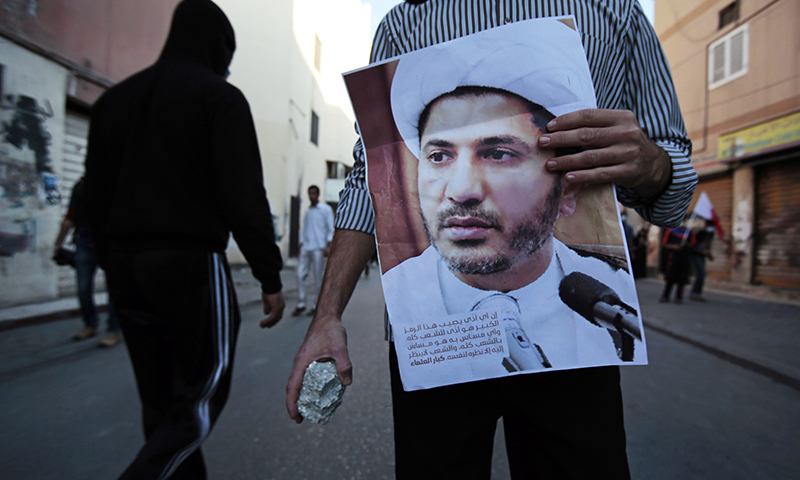


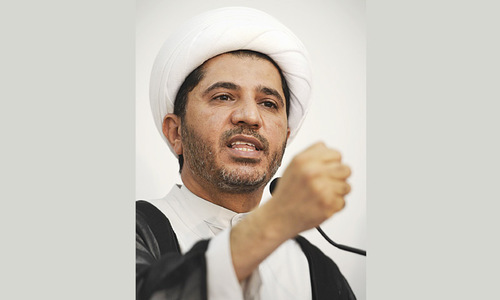
DUBAI: Bahrain sentenced the head of the country’s Shia opposition movement to life in prison on Sunday for spying for rival Gulf state Qatar in a ruling rights groups have called a travesty.
Sheikh Ali Salman, who headed the now-banned Al-Wefaq movement, and two of his aides had been acquitted by the high criminal court in June, a verdict the public prosecution appealed.
The public prosecutor said in a statement that the three had been unanimously sentenced by the appeals court for “acts of hostility” against Bahrain and “communicating with Qatari officials ... to overthrow constitutional order”.
Ali Salman was acquitted by trial court, but public prosecutor said the appeals court sentenced him for ‘acts of hostility’
Bahrain, along with Saudi Arabia and the United Arab Emirates, severed all ties with Qatar in 2017, banning their citizens from travel to or communication with the emirate over its alleged ties to both Iran and radical Islamist groups.
Sunday’s verdict against the Shia cleric can still be appealed.
‘Unlawful verdict’
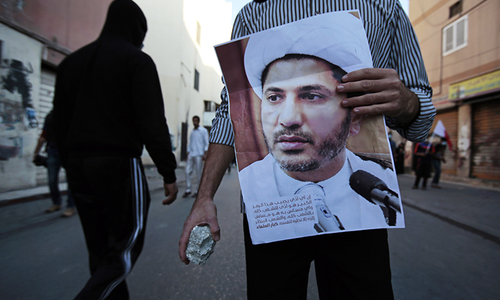
Opposition movements, both religious and secular, have been outlawed since 2011 and hundreds of dissidents imprisoned — many of them stripped of their citizenship in the process.
Salman’s Al-Wefaq was dissolved by court order in 2016. The cleric is currently serving a four-year sentence in a separate case — “inciting hatred” in the kingdom.
Human rights groups have said cases against activists in Bahrain — men and women, religious and secular — fail to meet the basic standards of fair trials.
Amnesty and HRW categorise Salman and other jailed opposition leaders prisoners of conscience.
Advocacy groups, including Amnesty, slammed Sunday’s ruling against 53-year-old Salman and his aides, Hassan Sultan and Ali al-Aswad as political reprisal.
“This verdict is a travesty of justice that demonstrates the Bahraini authorities’ relentless and unlawful efforts to silence any form of dissent,” said Heba Morayef, Amnesty’s Middle East and North Africa director.
“Sheikh Ali Salman is a prisoner of conscience who is being held solely for peacefully exercising his right to freedom of expression.”
Bahraini activists said Sunday’s verdict highlighted a broader regional policy towards freedom — the same policy that saw Saudi Arabian journalist Jamal Khashoggi murdered this month.
“Despite the ongoing scrutiny on the Gulf region, with Saudi Arabia being under the spotlight for its brutal murder of Jamal Khashoggi, Bahrain has made a decision that reeks of arrogance,” said Sayed AlWadaei, head of advocacy for the London-based Bahrain Institute for Rights and Democracy.
The verdict comes ahead of controversial parliamentary elections that Bahrain’s King Hamad has called for Nov 24.
Dissolved opposition parties, including Al-Wefaq and the secular Al-Waad, do not have the right to put forward their own candidates in the vote.
In June, Bahrain amended its law on political rights, prohibiting “leaders and members of political associations dissolved for violating the kingdom’s constitution or its laws” from running in legislative elections.
Alistair Burt, the British Foreign Office’s minister responsible for Middle East affairs, said he was “very concerned” by the life sentence, in a statement released on Sunday.
Ruled for more than two centuries by the Sunni Al-Khalifa dynasty, Bahrain has been hit by waves of unrest since 2011, when security forces crushed Shia-led protests demanding a constitutional monarchy and an elected prime minister.
Published in Dawn, November 5th, 2018