0
0

ISLAMABAD: The Awami Workers Party (AWP) plans to overhaul the capital’s master plan to ensure sufficient low-income housing as well as, educational, health and recreational facilities for all classes, AWP’s candidate for NA-54 announcedonWednesday.
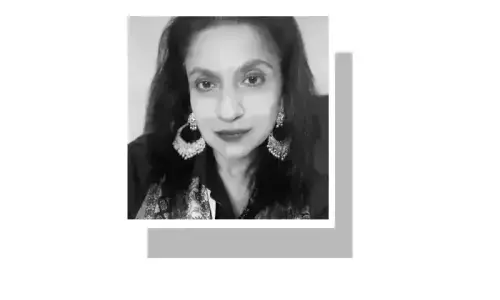
During a public meeting at the Maira Sumbul Jaffar informal settlement in F-12, Ismat Raza Shahjahan said Islamabad’s population had expanded from 800,000 in 1998 to approximately 2.2 million today, with most of the increase due to an influx of the rural poor from various parts of the country in search of employment.
She said Maira Jaffar was a classic example of a settlement that has come into existence in this time to meet the housing needs of a burgeoning population of migrant labourers for whom no formal housing options have been planned by the Capital Development Authority (CDA) or MNAs.
Ms Shahjahan, who is also the deputy secretary general of the AWP, said she intended to put forward policies without discrimination on the basis of gender or ethnicity, as well as to enforce the minimum wage and guarantee humane working hours and social security benefits for all workers, particularly women and children working as domestic employees.
A majority of the settlement’s working age population is subject to completely unregulated abuse by employers in homes and construction sites across the capital, she said.
“But like so many other issues faced by the working poor, the Pakistan Tehreek-i-Insaf (PTI), PML-N and even the religious groups and parties have demonstrated no concern in this regard, and are now once again invoking hollow sloganeering to mislead the constituents of such low-income areas,” she said, adding: “There are two faces of Islamabad – the people of these katchi abadis too have a face.”
Other speakers at the meeting highlighted endemic profiteering by Islamabad’s land ‘mafia’ that, in connivance with the CDA, generates high rents in informal settlements.
Naming mainstream politicians and parties, Ms Shahjahan said their rivals had traditionally treated elections like financial investments, in which rich capitalists used their wealth to gain political power to further their wealth.
“On the other hand, AWP candidates like myself are running their campaigns on small donations made by supporters because of our goodwill, which has developed through decades of working with local communities,” she added.
Speakers noted that while there were housing developments for the elite and middle class in and around the capital, none had been established for the working class, and attributed this to connivance between the land ‘mafia’ and state functionaries exploiting the working poor by not providing affordable housing opportunities.
The meeting was attended by young people and women from Maira Jaffar, as well as AWP volunteers. Residents of katchi abadis across the capital, some of whom remain subject to arbitrary evictions by the CDA, were also present.
The AWP is contesting 22 national and provincial assembly seats across the country in the upcoming elections.
These include eight for national assembly and 14 for the provincial assemblies; 13 from Khyber Pakhtunkhwa, four from Sindh, two from Punjab and two from Islamabad.
The party’s president Fanoos Gujjar is contesting from NA-9 in Buner, while AWP candidate Ammar Rashid is contesting from NA-53, where he stands against PTI chairman Imran Khan and former prime minister Shahid Khaqan Abbasi.
The AWP electoral manifesto “seeks to abolish the monopoly over the country’s wealth illegitimately held by a tiny number of capitalists, and eradicate all forms of class, gender and ethnic discrimination through the establishment of a welfare state.”
It consists of 15 different policy themes and includes progressive agenda points such as a maximum limit on agricultural land ownership and the distribution of excess and un-utilised private land amongst landless peasants and farm workers, funding low-cost housing schemes and legalising all informal katchi abadis, instituting a minimum wage of Rs30,000 per month and a minimum of 33pc representation for women in all elected bodies.
Other proposed policies include spending at least 10pc of the GDP on education and health and providing free education up to the university level.
Published in Dawn, July 5th, 2018