7
7

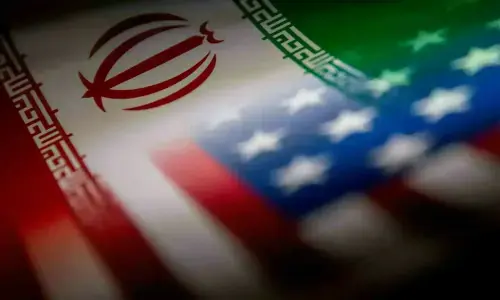
WHILE their recent talks in Washington with their US counterpart included various key issues, there was one major foreign policy question that both French President Emmanuel Macron and German Chancellor Angela Merkel brought up: the Iran nuclear deal, formally known as the JCPOA.
And while the Europeans tried to convince Donald Trump not to scuttle the deal as the May 12 deadline for the US president to recertify it approaches, there is little evidence they were successful. In fact, as Mr Macron commented after his sojourn in the US capital, it is highly unlikely that Mr Trump would recertify it. Indeed, the nuclear deal is not a bilateral arrangement — it involves Iran and the P5+1, the five permanent Security Council members plus Germany; yet should the US leave the agreement, many of the financial benefits Tehran would have accrued under the deal would no longer be available.
Mr Trump has used a number of nasty epithets to describe the agreement — “insane, the worst deal ever” etc. However, many observers have hailed the 2015 pact as a commendable example of multilateral diplomacy that averted a potentially disastrous new confrontation in the Middle East. Unfortunately, as the feelers coming out of Washington indicate, that confrontation may very well be back on track.
Mr Trump, backed by Israel and his hard right domestic constituency, feels the deal is skewed in Iran’s favour. He is also critical of Iran’s regional activities — missile tests, geopolitical involvement in Yemen, Syria etc. However, if there are issues that the US or the Europeans feel need to be addressed, they should open the channels of dialogue with Tehran and discuss these. Sabotaging a deal that by the accounts of all neutral observers, especially the IAEA, is working by clubbing together other issues is not smart foreign policy.
The Iranian government is quite clear: a new deal or renegotiated deal means no deal. While all sides should shun a rigid approach, the US and its allies must realise that torpedoing the JCPOA will create a new conflict in the Middle East with devastating consequences for all. But perhaps that is what the cabal of hawks that currently surrounds the US president wants. There are currently just under two weeks before Mr Trump’s decision. In the interests of regional and world peace, the US leader should carefully consider the consequences before announcing his choice.
Published in Dawn, April 30th, 2018