0
0
PESHAWAR: The government of Punjab has purchased generically similar drugs and disposable surgical items at prices higher than Khyber Pakhtunkhwa for the public sector hospitals for fiscal year 2017-18, causing Rs1.489 billion loss to the public exchequer, reveal documents and a comparative analysis of the items procured.
A comparison of 95 items bought by both the provinces has revealed a big difference in the price of same drugs or disposable items procured for the public sector hospitals.
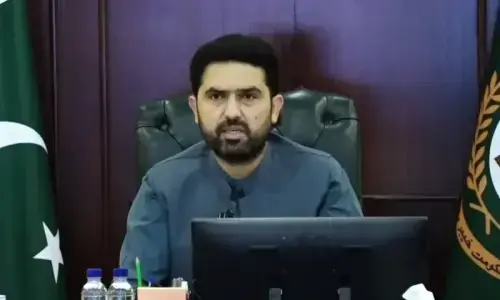
Punjab government’s spokesman Malik Ahmad Khan, however, rejected this and told Dawn on phone that it was untrue that Punjab had bought drugs on higher prices than KP.
Spokesperson for Punjab govt rejects claim
“In fact, we have purchased 38 items on lower prices than KP. The medicines, we procured have been tested by international WHO pre-qualified laboratory as well as Chemical Center Singapore, Intertek Switzerland, Health Concept Thailand and Cenqam South Africa,” he said.
According to the lists of drugs purchased by both the provinces available with Dawn, Punjab purchased CVP Line Double Lumen Drug at Rs3,000 and KP paid Rs2,530 for the same, showing a difference of Rs470 per piece. The former paid Rs 6.1 million more than the latter for the same drug.
Erythropoietin was bought by Punjab for Rs649, paying Rs383 more than KP’s Rs266. KP procured circle round body needle (silk) at Rs18 and Punjab Rs154. The rate for Tobramycin+Dexamethasone, an eye drop, was Rs26.70 in KP and Rs122.85 in Punjab.
Difference in prices range from Rs1 to Rs470 for all the 95 items purchased by both the provinces, according to details contained in the lists.
A total of 218 items have been purchased by Punjab, but 95 most common items were analysed to compare the rates while a few of the items had the same prices in both the provinces. Punjab had 100 times more budget for medicines than KP. Punjab had 218 items on its formulary list as opposed to KP which had 700 approved items. Both the provinces were required to purchase drugs that could meet the requirements of all the patients. Punjab, having lesser items on formulary list, covered the gap by purchasing drugs through local purchase on market rates, which enables the concerned hospitals’ administrators to buy the drugs from the local market directly.
KP has Rs50 million budget for hepatitis drugs against Punjab’s Rs550 million. Punjab mostly banked on brands based on Intercontinental Marketing Service (IMS) which focuses on pharmaceutical marketing and sale resources.
Viewing its importance, the KP had made it part of its technical evaluation criteria, but it’s not the only source for the selection of quality medicines, according to experts involved in the process of drug purchase.
KP has been following a process for drug procurement which is based on quality parameters, starting from raw material to finished products. Under it, 70 per cent of the criteria aim to take care of technical evaluation for the selection and rate contracting and 30 per cent financial evaluation.
Technical evaluation aims to ensure quality and transparency in line with international standards, including international accreditation, quality certifications and good manufacturing, laboratory and storage practices keeping in view the importance of general financial rules to rationalise and utilise the government’s resources and to put brakes on the brand monopoly.
KP seeks international certification duly attested from the embassy of concerned manufacturers and ensures that the imported medicines or disposable items were used in the parent countries of the manufacturers. Majority of the firms qualified by the Punjab government weren’t approved by the KP government due to non-fulfilment of valid international certification.
For the year 2017-18, some 750 firms had applied to sell their products to the KP health department of which only 182 were given a go-ahead.
Malik Ahmad Khan, however, insisted that the process adopted by the Punjab government for purchase of medicines had been fully transparent which had saved millions of rupees of the public exchequer by procuring economical and quality medicines.
“We have revamped the procurement process in 2016-17 to provide high quality drugs to our people,” he said.
Published in Dawn, April 1st, 2018