10
10

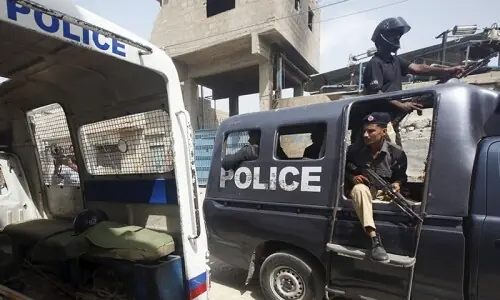
A TRAGIC death in Karachi has shone a much-needed spotlight on a dark practice of elements within the state.
The euphemism of ‘encounters’ and clinical terms such as ‘extrajudicial killings’ hide the true horror of what it is: premeditated murder by men in uniform, the very people tasked with protecting the public.
Naqeebullah Mehsud, taken into custody by the police in Karachi and almost certainly killed by elements within the force, has become the wrenchingly human face of a grotesque practice against the citizenry.
It is hoped that Naqeebullah’s killers will be identified and punished under the law while all elements in the chain of command who condone such practices are identified, expelled from the police and other parts of the state, and punished appropriately.
There can be no room in the 21st century and more than seven decades of this country’s existence for barbaric, antediluvian practices.
What is truly needed is an honest reckoning with such practices across the country.
Police practices in Karachi may be under intense scrutiny at the moment, but the problem is undeniably national. Indeed, over the decades, some policemen have forged a defiant, tough-guy image by becoming known for illegal practices. In Punjab, a crime wave, be it so-called dacoits, kidnappers or sex criminals, has been routinely dealt with by sending in policemen willing to do the unconscionable.
In Balochistan, the security apparatus has near total impunity.
In Sindh, the systemic politicisation of the police force has left both rural and urban denizens mostly terrified of contact with it. In KP, commendable new police reforms could usher in an era of significant, positive change, but the militant threat has almost certainly helped gloss over regular abuses.
Across the country, instead of respecting the police, the public almost always fears the law enforcers.
Equally true is that the police forces themselves have been demoralised by political interference, a lack of necessary investment and poor training.
Arguably, no one sets out to be a monster in uniform and there are honest, professional and humane policemen across the country.
But there does appear to be a new impunity rising under the garb of counterterrorism operations. The terror threat and the public’s legitimate fears appear to have created the space for a new generation of policemen who are willing to align with elements within the state to both enrich themselves and terrorise the public.
Naqeebullah’s death in Karachi has triggered an avalanche of anecdotal evidence and personal accounts of police excesses in the name of fighting terrorism.
Long term, the corrosive effects on the security apparatus itself could be catastrophic.
In the near term, it is vital that the citizens be protected from corrupt elements within the state willing to inflict violence on the vulnerable. Naqeebullah Mehsud’s tragic, vile killing could be the right moment to effect systemic change.
Published in Dawn, January 23rd, 2018