5
5

ISLAMABAD: Human rights activist Asma Jahangir on Thursday told the Supreme Court that the United Nations Educational, Scientific and Cultural Organisation (Unesco) had expressed concern that the Orange Line Metro Train could pose a threat to the Shalimar Gardens, a world heritage site.
“[Unesco’s] World Heritage Committee, in its 40th session in 2016, had expressed serious concern about the development of the Orange Line and had requested the government to prepare a visual impact study before pursuing work on the Orange Line associated with the Shalimar Gardens,” the counsel told a five-judge SC bench.
Headed by Justice Ejaz Afzal, the bench is hearing identical petitions filed by the Punjab government, Lahore Development Authority, Punjab Mass Transit Authority and Nespak, challenging the Lahore High Court’s suspension of construction work on the Orange Line project within 200 feet of 11 heritage sites.
The order came on a petition filed by architect and civil society activist Kamil Khan Mumtaz.
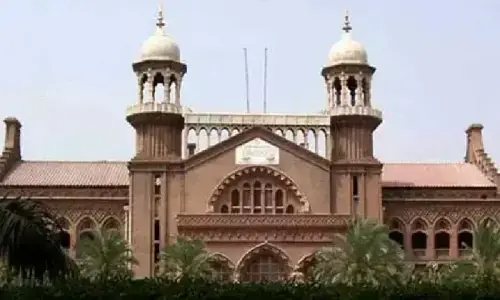
The heritage sites include the Shalimar Gardens, Gulabi Bagh Gateway, Buddhu ka Awa, Chauburji, Zebunnisa’s Tomb, Lakshmi Building, General Post Office, Aiwan-i-Auqaf, Supreme Court’s Lahore registry, St Andrews Presbyterian Church on Nabha Road and Baba Mauj Darya Bukhari’s shrine.
Asma Jahangir argues NOC based on Nespak report not credible since consultant is also a party
On Friday, Advocate Azhar Siddiq will argue on behalf of the Civil Society Network, after which the petitioners will be allowed to rebut, and possibly, wrap up the same day.
Earlier, referring to the Unesco meeting on July 16 last year, Ms Jahangir reminded the court that the meeting also had also asked the government to submit a heritage impact assessment for all proposed projects that might have an impact on the Outstanding Universal Value (OUV) of the Shalimar Gardens, prior to the approval of the project.
The OUV describes the criteria used to place sites on the UN’s World Heritage List. Currently, 962 properties are “recognised by the global community as having special significance which needs to be protected for future generations to enjoy”.
The committee had asked the government to invite a joint World Heritage Centre-International Council on Monuments and Sites (Icomos) monitoring mission to the Shalimar Gardens to examine the Orange Line project so it could review arrangements for the management and protection of the site and hold discussions with the government, but the mission has not yet reached Pakistan.
“They (the mission) will not be coming to stage a demonstration, but rather to suggest solutions to save the heritage site because they have the expertise,” the counsel argued.
The Unesco meeting had also sought an updated report on the state of conservation of the Shalimar Gardens, to be examined by the committee in its next session in 2017 to consider whether there was any potential danger to its OUV.
The same team, in 2012, regretted the accidental destruction of two of the three hydraulic works and walls of the Shalimar Gardens in 1999, when the Grand Trunk Road was being widened, contending that this significantly marred the integrity of the site.
“Does this not worry the elected representatives of the province?” Ms Jahangir wondered. She then cited a judgement of the high court of New Delhi, which held that the city should integrate its elegant past and modern developments into an organic whole by the fusion of cultural and architecture heritage with modern developments.
“If it loses its heritage, Delhi loses its soul. There has to be sustainable development,” the judgement had observed. The counsel emphasised this when she contended: “Lahore should not lose its soul.”
The counsel also cited a 2015 Sindh High Court judgement where the illegal allotment of 100 acres of land of the Kali Mai Temple for a housing scheme was cancelled, even though the site was not included in a list of archaeological sites.
Recalling the 2001 destruction of the Bamiyan Buddha statues in Afghanistan, she said that at the time, people used to ask “why cry for the statutes when people were being killed?”. “But the statutes were part of world heritage and belonged to all,” she said.
Ms Jahangir regretted that Pakistan had also destroyed the ancient ruins of Harappa — another archaeological site — while laying railway tracks.
Justice Sheikh Azmat Saeed also regretted that many historical buildings in Harappa were demolished to make way for railway lines.
The counsel also highlighted that the second NOC for the Orange Line project was not credible, since it was issued in response to a Nespak report, a consultant which itself was party to the contract.
Published in Dawn, April 14th, 2017