KARACHI: “Today we are no more part of the milieu that once defined us. It has multiple reasons and citing the economic reason alone does not encapsulate the whole issue.”
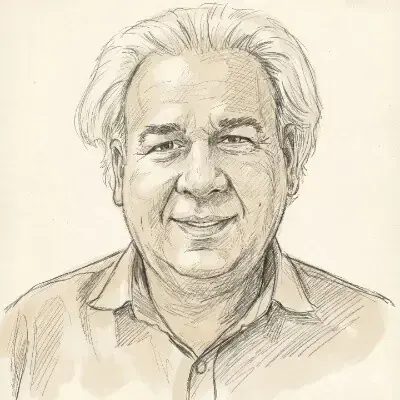
This was said by eminent scholar Dr Noman Ul Haq during his lecture on ‘In search of roots of exclusivism in a multicultural milieu’ in the arts auditorium of the University of Karachi on Thursday afternoon.
Dr Haq, who is adviser for social sciences and liberal arts at the Institute of Business Administration (IBA), said there was a time when the quality of Urdu (writings) was the same in cities as culturally varied as Sialkot, Delhi, Lucknow and Lahore. He said Iqbal did not belong to Lucknow or Delhi but he used Urdu with utmost care. He said these days people were employing the language in different ways (some say iftar, others say aftar, for example) which did not make us look at language favourably. He said diminishing of milieu was detrimental to (people’s) abilities.
Dr Haq said multiculturalism implied a multilingual atmosphere in society. He said if we moved 20 to 25 miles from Karachi, we would notice changes in the use of language. He said if an eroding milieu continued despite such diversity then it was something to worry about. He said there was internal tension in us. But, he asked, where to find its roots. He said it was a complex question and the answer was not a straightforward one either.
Dr Haq said there were multiple factors — economic, social, cultural, political, intellectual and ideological — related to the issue. He said people usually ascribed it to the economic factor. But, he said, the issue was basically of an intellectual and ideological nature (fikri aur nazaryati), and all of that was hidden in historical factors (tareekhi awamil). He said the postcolonial era cut us off from our legacy which had dire consequences. He said once the Ottoman Empire disintegrated, those who were living together suddenly became Syrians, Jordanians and Saudis. He said it was extremely difficult to divide ourselves into new relationships. He said a very good example of it was given by Manto in his story Toba Tek Singh. He said the protagonists in the story were crazy individuals whose minds did not work. He said through them the writer raised the question that where Toba Take Singh was. “My sister was there, how am I here? My father was there, how did he come over here?”
Dr Haq said the phenomenon (of having new relationships) hurt the education system most, because of which language got affected. Education, he said, became a means to get employment. He said one of historian Ayesha Jalal’s sentences was etched in his mind: “Pakistanis cannot explain themselves.” He said it was right because we did not have anchorage. He also quoted Edward Said, “Colonialism has forever dislocated us epistemologically.”
Dr Haq said today no one talked about Iqbal’s poetry and the poet was so much ‘out of fashion’ that if anyone started to speak about him, they did so apologetically. He said there was a time when young poets used to talk a lot about Iqbal. Explaining Iqbal’s poetry with reference to Karbala, he said he knew that there were people in the audience who would understand it, but the young generation did not have the ability to understand abstract notions. The verse he read out was:
Reg-i-Iraq muntazir, kisht-i-Hijaz tishna kaam
Khoon-i-Hussain bazdeh, Kufa-o-shaam khwesh ra
He said in this verse Iqbal had rehabilitated history into cosmology. He said the world of metaphor was pure. He said grossness of physical reality was not part of metaphor. He said certain ability was required to understand such abstract ideas. He said it was the need of the hour to work towards that goal.
After the lecture, dean of faculty of Social Sciences, University of Karachi, Prof Dr Moonis Ahmar urged the younger generation to have a more committed attitude towards learning. He also thanked Dr Noman Ul Haq for addressing the students.
Dr Haq’s talk was part of the Distinguished Lecture series organised by the Faculty of Social Sciences, University of Karachi.
Published in Dawn, October 21st, 2016