0
0
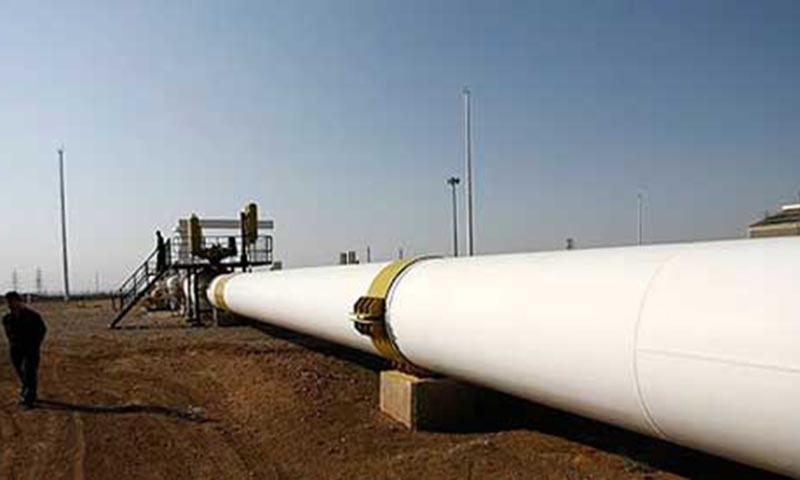
IT is good that the government is continuing talks on the TAPI pipeline even in the midst of a political crisis at home.
This week, as the crisis approached boiling point, the prime minister met Rashid Meredov, who is both the deputy prime minister and foreign minister of Turkmenistan to review progress on the TAPI gas pipeline project. The political situation should not be allowed to hold important policy decisions hostage.
Also read: Sharif vows to complete Tapi project
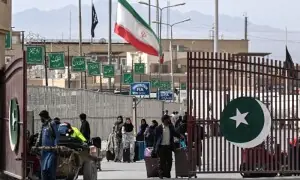
Likewise, it would be good to see the important matter of pipeline imports of natural gas liberated from geopolitics. Even as the government advances the TAPI project, the other big pipeline project — the Iran-Pakistan pipeline — is suffering from neglect. It may be true that Iran’s involvement is causing financiers to shy away from the latter, but the government could do more to build on Iranian commitments to meet the project’s construction costs. It is difficult to escape the impression that the government is itself soft-pedalling on the Iranian project to appease its benefactors in Riyadh.
It has accepted a ‘gift’ from the Saudi government that has helped to stabilise the country’s foreign exchange reserves in the short term, but it does appear as if measures of this sort have left the government beholden to the Saudi authorities and thereby reluctant to undertake actions that might be viewed with displeasure by the ‘friendly country’.
Pakistan needs pipeline imports of natural gas to meet its growing deficits at home. It also needs to build stronger ties with its neighbours, east and west as well as north. Both priorities are linked, and unlocking the potential of Pakistan’s location is central to breaking out of the low-growth equilibrium in which the economy is stuck.
By all reckonings, the projects to build natural gas pipelines from Iran and Turkmenistan are necessary for the country’s medium energy security, and both projects should be processed with an equal measure of urgency. The stream of positive messages for the Turkmenistan project is good.
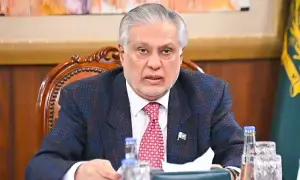
The Thursday meeting released many smiles in Islamabad and a generous photo op showing files being exchanged amidst handshakes. The silence on the Iranian project by contrast, is conspicuous, save for one dour pronouncement by the finance minister early in the year that foreign financiers are not interested in the project. Our western neighbours deserve better answers than this, and Pakistan’s medium-term energy security deserves more balanced attention than what the government has managed thus far.
Published in Dawn, Aug 10th, 2014