0
0
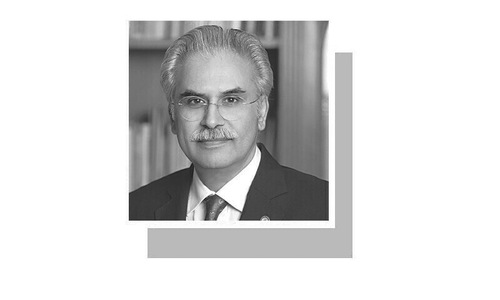
THIS is apropos of the article ‘Security and FMCT’ by Zahir Kazmi (Sept 20). There is no doubt that South Asian peace and stability heavily, indeed completely, rests on nuclear deterrence and the ‘balance of terror’ that exists between nuclear-armed Pakistan and India.
Moreover, one fully agrees with Mr Kazmi’s analysis that the West’s double standards have threatened the non-proliferation regime and arms control-cum-disarmament efforts more than anything else.
Historically, the ‘second nuclear age’ is in vogue. In the first nuclear age, which started with the United States nuclear tests, the world was about to reach the brink of demolition. However, nuclear deterrence and the doctrine of MAD -- mutual assured destruction -- emerged in the 1970s and successfully averted the ‘doomsday scenario’, which was being drummed up by nuclear pessimists.
Similarly, in today’s second nuclear and post-cold-war age, ‘credible minimum deterrence’ can play a pivotal role in maintaining peace and stability, especially in the South Asian context. As a matter of fact, South Asian stability is a direct outcome of a robust nuclear deterrence that prevails between Pakistan and India.
The fact that the concept of total war, at least, has been rendered obsolete, though dangerous doctrines like cold start have found place in Indian strategic circles, in both the states’ strategic thinking. It is the victory of threat of deterrence and the threat of use of force, rather than a hollow and hackneyed mantra of idealist peace theorists.
In spite of such a laudable performance, the US has been endeavouring to cut the life of peace short by getting the Fissile Material Cutoff Treaty, which is still a proposal, implemented. Currently, India is in a far better condition, compared to Pakistan, when it comes to fissile material stockpiles.
Therefore, the above fissile material disparity will threaten the whole balance of terror by diluting the strength of credible minimum deterrence.
Besides, if credible deterrence is disturbed, Indian conventional superiority will provide Indian strategic thinkers more freedom of action. As a result they will try hard to get dangerous doctrines like cold-start implemented. Thus, peace and stability will vanish.
Against the above backdrop, the US’s insistence on Pakistan to sign the treaty seems to be an open discrimination.
Indeed, the US has already weakened the international non-proliferation regime by signing a nuclear deal with India.
Therefore, it will be a direct blow to peace and stability of the world, in general, and South Asia, in particular.
The US and other ‘nuclear-haves’ ought to prefer global peace and stability to parochial selfish interests.
SYED GOHAR ALTAF Quaid-i-Azam University, Islamabad