0
0
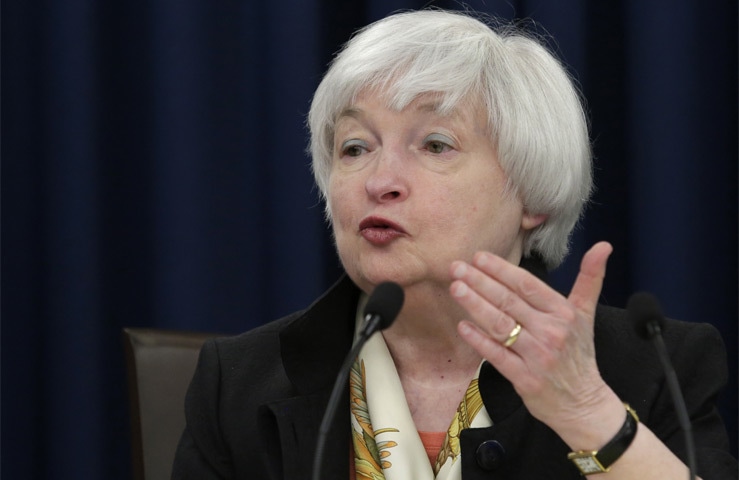
WASHINGTON: Justifications for an interest rate increase in the United States have grown in recent months, US Fed chief Janet Yellen said Friday.
In an address to a central banking symposium at Jackson Hole, Wyoming, Yellen took note of strong job growth, saying gradual increases in the Fed’s benchmark rate in the coming years should be expected.
“In light of the continued solid performance of the labour market and our outlook for economic activity and inflation, I believe the case for an increase in the federal funds rate has strengthened in recent months,” Yellen said, according to her prepared remarks.
Yellen’s words returned a measure of clarity on the intentions of US monetary policymakers, who have been publicly at odds in recent months over the need to raise rates in the near term.
As the stewards of monetary policy in the world’s largest economy, the Federal Reserve’s thinking is intensely scrutinised by market players everywhere, driving investment decisions in commodities, equities and foreign exchange markets around the globe.
LESS FUZZY MESSAGE: Fed watchers had complained this year that US central bankers’ public pronouncements had been inscrutable and sometimes contradictory, leaving investors perplexed.
Her remarks raised the likelihood that the Fed will increase the rate from its current ultra-low 0.25-0.50 per cent level by the end of the year, and as early as its next meeting in September.
The Fed had at the end of 2015 raised rates for the first time in nearly decade, ending the policies designed to respond immediately to the Great Recession.
But policy makers quickly veered off this course early this year, fearing that the US economy was growing more weekly than they had foreseen and global risks, especially from China and Europe, had risen.
Despite her clear signal that a rate hike was now more likely, Yellen cautioned that Fed decisions would depend on economic conditions that could vary widely.
“Our ability to predict how the federal funds will evolve over time is quite limited because monetary policy will need to respond to whatever disturbances may buffet the economy,” Yellen says, adding that some such conditions were visible “only in hindsight.” “For these reasons, the range of reasonably likely outcomes for the federal funds rate is quite wide.” Yellen cited the range of predictions from Fed policy makers according to whom there was a 70pc probability that rates would be between zero per cent and 3.25pc by the end of 2017. The range expanded to 0-4.5pc by the end of 2018.
“When shocks occur and the economic outlook changes, monetary policy needs to adjust,” Yellen said.
Yellen earlier this year had said Britain’s surprise June vote to exit the European Union had been one factor causing the Fed to forestall an increase in rates.
Economists have also said the US elections also add a measure of uncertainty to global economic outlook.
Yellen said the economy was now adding jobs at an average rate of 190,000 per month and that household spending remained strong.
Published in Dawn, August 27th, 2016