KATHMANDU: Residents of a slum in the Nepalese capital Kathmandu told on Wednesday how the homes they had lived in for up to 20 years were bulldozed to make way for a riverside park.
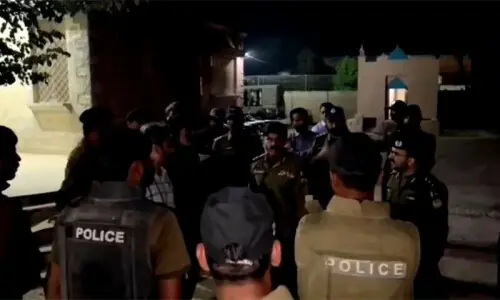
About 1,500 people were forced out of their houses by riot police on Tuesday in the first phase of a government-ordered slum clearance scheme along the banks of Bagmati river.
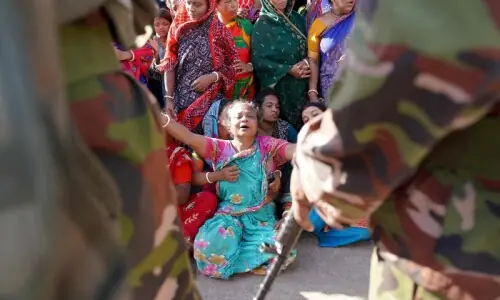
“I cried my heart out when I saw bulldozers demolishing our home,”34-year-old Manju Adhikari, a mother of daughters aged 15 and 17, told AFP.
“When my younger girl came back from school, she asked me where were we going to live. I didn't have the answer. We have nowhere to go.”
Angry residents threw stones at police carrying shields and batons as mechanical diggers razed their brick-built homes. Many slum-dwellers fled, carrying clothes, blankets and furniture.
“A friend had informed us in middle of the night that five bulldozers were ready to remove our homes. We couldn't sleep. We were able to salvage our belongings but others couldn't even do that,” Adhikari said.
“Some of our neighbours pelted stones and police started to arrest them.
Those who were unable to collect their belongings came later but their TV sets and gas cylinders were already broken.”
The evictions followed a decision by the government to force a total of about 10,000 residents, who it says are illegal squatters, from their properties along the river after years of wrangling.
Authorities have pledged to find alternative housing to those it classifies as “genuine landless people” and to provide 15,000 rupees in compensation to each family.
“We have evicted 1,452 squatters from the Thapathali area. They protested against the move and pelted stones at the police. We arrested 31 on Tuesday,”Kathmandu police spokesman Dhiraj Pratap Singh told AFP.
Refugees from Nepal's poverty-stricken countryside first began settling in large numbers along river banks in Kathmandu in the early 1990s, attracted by the prospect of jobs and to escape a bloody civil war which ravaged rural areas.
Human Rights Watch has written to the Nepal government warning that forced evictions could violate international law.