KARACHI, June 3: Speakers at a workshop on Sunday demanded that a national commission be set up to solve the problems being faced by the scheduled castes and that caste-based discrimination be declared a serious crime.
They were speaking at a national workshop on “Caste-based discrimination in Pakistan,” organised by the Pakistan Institute of Labour Education and Research (Piler) and the Thardeep Rural Development Programme (TRDP).
The workshop was part of an international research project being conducted in Pakistan, Nepal and Bangladesh, sponsored by the Denmark-based International Dalit Solidarity Network (IDSN) and Indian Institute of Dalit Studies (IIDS).
The speakers demanded that a constitutional package and protection for scheduled castes be provided. They said steps should be taken to stop forced conversions of scheduled caste girls and an independent commission should be formed to investigate the conversions.
They demanded that special scholarships be provided to Dalit students and steps be taken to end the discrimination in schools against them, along with reforms in the curriculum. It was further demanded that the Dalits be given due representation at the decision-making levels so that they could protect their rights.
Earlier, researcher Zulfiqar Shah presented the initial findings of his study carried out on 5,000 households. He focussed on four districts – two in lower Punjab and two in lower Sindh. He said that about two million scheduled caste people – belonging to the Kolhi, Meghwar, Bheel, Balmiki, Oad, Jogi, Bagri and other communities – were the poorest of the poor and were discriminated against in day to day life, despite the fact that the country’s constitution promises equal rights to all citizens.
The survey revealed that the worst form of discrimination — from both upper caste Hindus and Muslims — came in the shape of untouchability, which means they were denied access to public places like restaurants, barber shops, etc.
In some places they were served in separate crockery and in other areas they were even denied entry to certain restaurants and shops.
They had segregated housing, while the situation is worse in rural areas as 95 per cent of Dalits living in Rahimyar Khan reported untouchability as compared to 35 per cent living in Multan. Sixty-nine per cent of those surveyed said that their upper caste Hindu and Muslim neighbours either do not invite them to their social gatherings like weddings, or if invited they are served food separately. This attitude was relatively more prevalent in Rahimyar Khan (87 per cent) than in Tharparkar (60 per cent).
The study claims that only one per cent of scheduled caste people were in government service, that also in the lowest tiers like primary school teachers. The illiteracy level in Dalits stood at 73 per cent against the national literacy level of around 50 per cent. The majority of these literates are educated up to the primary or secondary school levels, while only one per cent were graduates.
Approximately 56 per cent of Dalit families live in single-room katcha houses, while 35 per cent reported the death of a child under 5 years in their families. The data showed that they were ignored by the political groups and government; hence they were unable to reap any benefits from the devolution plan. They also faced economic exploitation and the majority of bonded labourers in Sindh are from the scheduled castes.
The research, conducted by Mr Shah and his team, revealed that very little information was available on the status of issues being faced by marginalised groups like the scheduled castes. Also, there was no legal protection or affirmative action policy to combat caste-based discrimination in Pakistan, unlike in India.
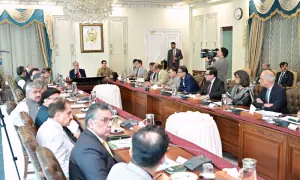
The research presentation was followed by a discussion in which about 40 participants, including Dalit community representatives, political leaders, academics, researchers and activists, took part. At the end of the workshop the participants decided to form a Pakistan Dalit Solidarity Network.
Former MNA Dr Khatumal Jewan, former MPA of Punjab Lala Mehar Lal Bheel, Rochi Ram Advocate, Dr Sono Khingharani of the TRDP, journalist Surrendar Valasai, Dr Aly Ercelawn of the Piler and others also spoke.
A number of representatives of the scheduled castes from Sindh and Punjab attended the workshop.