OBITUARY: The last living link to Khairpur’s princely past
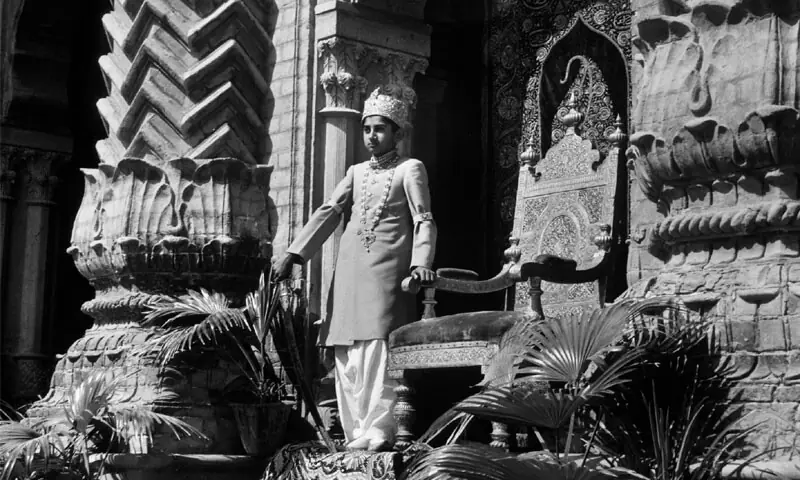
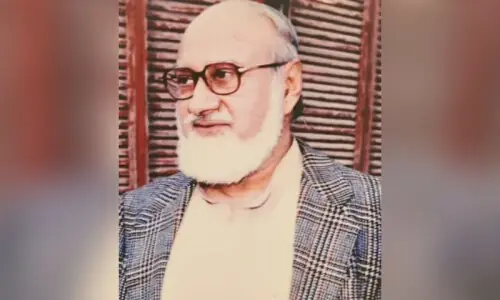
THE significance of Mir George Ali Murad Khan Talpur II, the last ruler of the former princely state of Khairpur who died on Oct 5, lies in more than just having witnessed the disappearance of a world. In Khairpur’s final years, he presided over an experiment in representative government and social development that deserves to be remembered.
Born in Brighton on June 29, 1933, the eighth Talpur ruler of Khairpur was named George after King George V, whom his father, Mir Faiz, admired. In 1944, his father suffered a breakdown and the state was then run by the British Resident with the aid of local ministers.
The announcement of the end of the British Indian Empire under the June 3, 1947 plan meant that Khairpur, in treaty relations with the British since 1838, would regain its sovereign status on Aug 15, 1947, when British paramountcy lapsed. Thus, in order to make the transition smoother, the British deposed the ill Mir Faiz, and on July 24, 1947 the 14-year-old George Ali Murad became the Mir of Khairpur, with his uncle Ghulam Hussain Talpur as Regent.
Khairpur celebrated Aug 15 as its Independence Day, but its position on the railway linking Punjab and Sindh made it strategically vital to Pakistan. Negotiations followed, and on Oct 3, 1947 the regent signed the Instrument of Accession, making Khairpur the first contiguous princely state to join Pakistan. It ceded defence, foreign affairs and communications, but retained its sovereignty and the power to accept or reject a future constitution of Pakistan.
Joining Pakistan brought new challenges and opportunities and Mir George Ali Murad rose to both. After a stint at Cambridge, he assumed full ruling powers in September 1951. Teaming up with Mumtaz Kizilbash, chief minister since 1948, he oversaw a series of reforms that changed the nature of the state and the life of its people.
In a first, Khairpur held Pakistan’s first elections on the basis of universal adult franchise and its 15-member Assembly, elected in May 1950, was the country’s first fully democratic chamber. No wonder then, when Prime Minister Liaquat Ali Khan inaugurated it, he noted that Khairpur had “stolen a march on others”.
The genius of the Mir was that he recognised and appreciated democratic government and worked with it for the uplift of his people. Soon under the Government of Khairpur Act 1953 the state became a province, with the Mir as its constitutional head, akin to a governor.
Khairpur also led the way in development. Its income nearly tripled, from Rs5.7 million in 1948 to Rs16.9m in 1955, giving Khairpur a per capita budget income of Rs53 against Punjab’s Rs20. No doubt this was spurred on by the Khairpur Textile Mill, established in 1951, which employed over 2,000 people. Over 22 per cent of the budget went to education, the highest of any unit in Pakistan. Education was free up to Matric, with free books and hostels, and elementary education was compulsory for boys. As a result, its literacy rate nearly doubled in 10 years.
But just as things were going well, all came to a halt. Faced with the centre’s plan to merge all of western Pakistan, the Assembly protested that Khairpur was “ahead of even the Governor’s provinces in Pakistan in several respects” and that its people “cannot be compelled against their will to merge…” But these protests fell on deaf ears. Under mounting pressure, the Assembly voted for merger on Nov 10, 1954 and the Mir signed on the dotted line, ceding to Pakistan “his sovereignty and all his rights, authority and powers as Ruler of the State”. A state founded in 1783 came to an end with the inauguration of One Unit on Oct 14, 1955.
The merger of the state took its toll on the Mir. He withdrew from public life, but remained deeply attached to Khairpur’s heritage and landscape, turning the family’s old hunting ground at Mehrano into an exemplary wildlife sanctuary.
Yet his most enduring attachment was to the people of Khairpur. In his foreword to my book A Princely Affair (2015), he lamented: “Sixty years after the ‘merger’ with Pakistan, the people of Khairpur are still waiting for Pakistan to provide even a fraction of the services and benefits provided by my state.” With his death, the last living link to Khairpur’s princely past is gone. However, the question of what that past achieved, and what its people still expect from Pakistan, remains.
The writer is dean, School of Economics and Social Sciences at IBA Karachi and author of A Princely Affair: Accession and Integration of the Princely States of Pakistan 1947-55.
Published in Dawn, October 12th, 2026