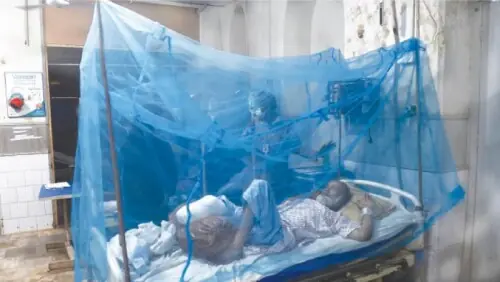
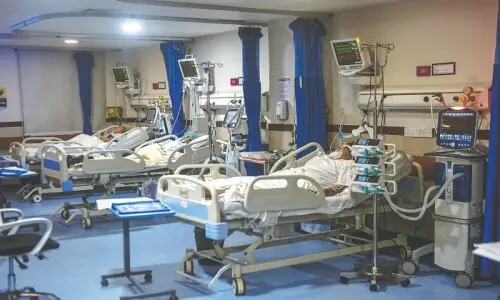
PAKISTAN logged 1.8m malaria cases last year, revealing that sustained preparedness is not on the government’s priority list.
The disease, preventable but potentially fatal, is registering a worrying rise in Sindh: out of the 10,033 patients screened on a single day, 916 tested positive.
The highest figure of 410 emerged from the Hyderabad division and 208 in Larkana. While there are four human malaria parasites, doctors say this is a vivax malaria spread due to relapse among patients who halt treatment once the fever subsides.
The reasons remain obvious — the vector-borne illness persists where poverty, climate shocks and poor healthcare render medical care a privilege instead of a right. Meanwhile, doctors in Karachi maintain the city’s patient caseload is much higher than what is documented. Some 25 cases are reported weekly, including a few dengue cases.
At a time when temperatures vary, monsoon patterns change and poverty is on the rise, mosquito breeding spots proliferate, becoming difficult to control. Additionally, the Pakistan Medical Association attributes the illness pattern to Karachi’s dilapidated sewerage system along with weather conditions.
Experts warn that without widespread preventive measures, strategy and vigilance in the province, the situation can spiral out of control. The truth is that only delivery matters. Annual transmission across the country, particularly in rural Sindh and KP, and areas of Balochistan, highlights the gaps in the healthcare infrastructure.
There is no political commitment to address the injustices that feed malaria. Health units including rural health centres must have diagnostic supplies, medicines and staff on hand.
Surveillance cannot be taken lightly, particularly when foreign aid is drying up. Malaria needs constant local investment as global health funds are exposed to pressure.
Pakistan has to give precedence to its people’s health to defeat vector-borne and other diseases. Without heightened deterrence, we will be helpless against potentially deadly outbreaks.
Published in Dawn, August 26th, 2026