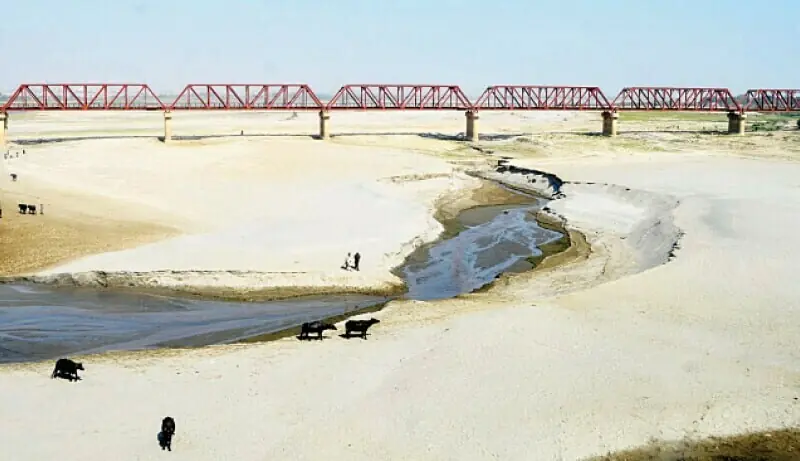


Flood season has formally begun in the country, and water flows at Sindh’s barrages, which until recently had been reporting severe shortages, have improved. Yet, the tail-end areas of lower Sindh have, ironically, remained underserved, leaving farmers short of water. The situation perhaps merits a fair internal audit of water governance by the provincial irrigation department, as fair water distribution within the province continues to elude growers.
Sindh has rightly long cried hoarse over being denied its due share of water by the regulator during the early and peak kharif season because of the operation of disputed link canals. Sindh bears more shortage than Punjab.
Historically, Sindh has faced inadequate river flows during the early kharif season as the Indus River System Authority (Irsa) prioritised filling dams, compromising releases to the province. Irsa also attributed the shortfall to delays in Wapda’s ongoing works at Tarbela Dam, which disrupted supplies to all provinces.
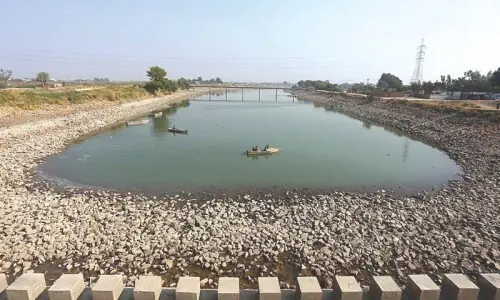
Water releases remained delayed despite relatively healthier reservoir levels, with the situation turning critical by mid-June when Kotri Barrage recorded a 65pc shortage.
Flood season has eased water availability in the barrages, yet farmers in lower Sindh continue to suffer
Tail-end agricultural lands continued to suffer chronic shortages despite abundant flows. “Water sharing becomes irrelevant once flood flows begin, and that is precisely what is being witnessed,” an official argued.
All three barrages in Sindh were by then receiving flows sufficient to meet the requirements of their canal command areas. Nevertheless, growers in the tail-end areas continued to face water shortages until the last week of July. This could be attributed to a combination of technical issues, inadequate desilting, water theft, the high-handedness of upper riparians along canal systems, and weak water governance.
It is primarily small and medium-sized farmers who end up as the losers because they don’t have any clout in the system. Their share of water is often appropriated by influential upper riparians with the right political and bureaucratic connections. Rather than resolving these longstanding inequities, the flood flows merely exposed the deep-rooted governance failures within Sindh’s irrigation system.
These included the Begari Sindh Feeder off Guddu Barrage, the Dadu and Rohri canals off Sukkur Barrage, and Akram Wah off Kotri Barrage. On paper, Sukkur Barrage’s North Western Canal (NWC) saw its shortage end only on July 21 when it finally received its accord-entitled supply of 6,900 cusecs.
“But what about the prolonged period during which the NWC remains without the required flows? These 6,900 cusecs are meaningless,” conceded a senior engineer in Sukkur. “The canal is yet to receive adequate flows to carry water to its tail-end areas, right up to Garang Regulator, where it also delivers Balochistan’s share after serving its command area in Sindh,” he added.
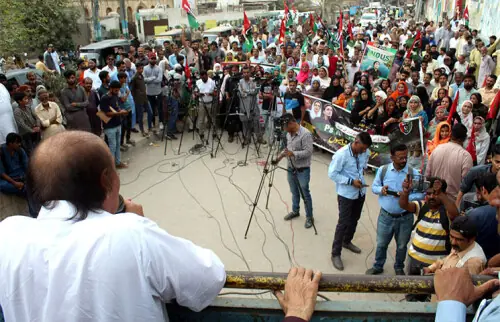
With canal systems performing poorly because of persistent operational and governance issues, interprovincial tensions between Sindh and Balochistan have resurfaced over water distribution, prompting protests by farmers in Balochistan. The province has been demanding its share from Guddu’s Pat Feeder and Sukkur’s North Western Canal, much as Sindh has been pressing Irsa for its own allocated supplies.
According to Sukkur Barrage sources, a pond level of 199.5ft was required for right-bank canals to receive the flows needed to meet the command area’s water requirements. With relatively improved flows at the barrage, the required pond level was achieved on July 7 and rose further to 200ft by July 23. Yet, complaints from growers dependent on the NWC, as well as their counterparts in Balochistan, continued unabated.
Despite improved supplies, Dadu and NWC canals of Sukkur Barrage, along with Old Phulelli and Akram Wah, continued to report shortages of varying degrees. Irrigation officials attributed the NWC’s problems to technical faults that prevent Balochistan from receiving its due share, even when flows at the barrage are available. “Dadu Canal also has a crest-level issue that affects its supplies,” an engineer said.
Similarly, tail-end areas of lower Sindh, particularly Thatta, Sujawal and Badin districts, remained deprived of water. Akram Wah of Kotri Barrage, for instance, continued to face technical issues that made water availability in its tail-end areas difficult. The canal is being modernised under a World Bank-funded project aimed at improving operational efficiency, but the benefits will take time to materialise.
Paddy growers in lower Sindh who had prepared nurseries for cultivation have suffered considerable losses. Kashif Khawaja, a paddy producer from Sujawal, which is a district already vulnerable to sea intrusion that is consuming its fertile lands, said he had incurred an estimated economic loss of around Rs2.5 million to Rs3m so far.
These losses stemmed from the nursery he prepared across 150 acres in Mirpur Bathoro and Sujawal talukas of Sujawal, using drainage water from nearby saline drains to sow the seed. “Usually, 60-70pc of the seed in a nursery is lost when drainage water is used,” he said. He now hopes to salvage the remaining 30pc of the seed in the farmland.
There are countless farmers like Khawaja who have raised similar complaints and staged protests. Like others, his land was dependent on the Old Phulelli Canal of Kotri Barrage, which has a command area of 833,651 acres. The canal is currently receiving adequate flows, but the water is not reaching tail-end areas.
Mr Khawaja holds the irrigation department responsible for failing to desilt channels feeding tail-end areas, which he believes is the primary reason water is not reaching farmers. “If our canal has flows of 10,000-11,000 cusecs, it is considered an adequate discharge to feed the tail ends. The canal was receiving 12,500 cusecs on July 23, yet we remain without water. The Sindh Irrigation Department appears least concerned about our plight,” he deplored.
Published in Dawn, The Business and Finance Weekly, July 27th, 2026