Pak-EPA awaits report as dead fish spotted again in Rawal Lake
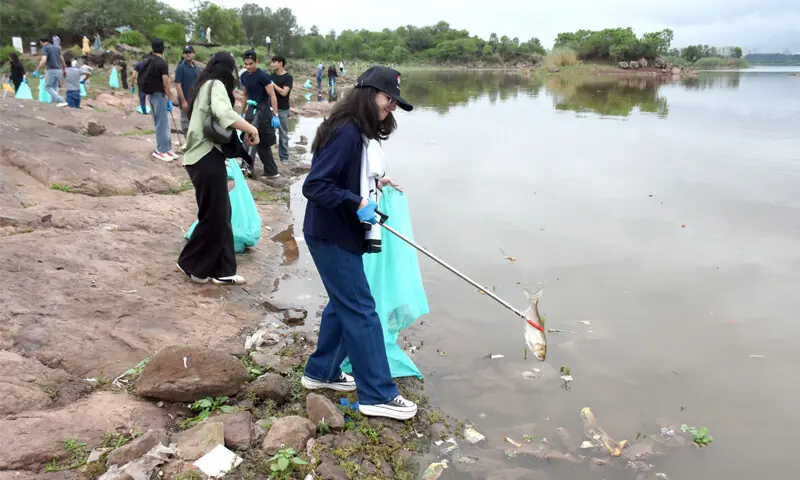
ISLAMABAD: Four days after dead fish surfaced in Rawal Lake, the Pakistan Environmental Protection Agency (Pak-EPA) is still awaiting a report to determine the causes of the fish deaths, a process that may take another four to five days.
Dead fish appeared in Rawal Lake last Sunday, raising environmental concerns. It remains unclear whether the dead fish currently visible to visitors are the same ones that surfaced four days ago or if more fish have died since then.
Director Pak-EPA Dr Zaigham Abbas attributed the fish deaths to increasing pollution in Rawal Lake, which is also a source of drinking water for residents of Rawalpindi.
In the past, Dr Abbas had also linked fish deaths in the lake to increasing levels of pollutants entering the water body during the rainy season.
Officials cite rising pollution, plastic waste and sewage inflows as possible causes of recurring fish deaths
“Whenever sewage and detergents flowing into Rawal Lake increase, they reduce oxygen levels in the water, which eventually suffocates fish,” Dr Zaigham Abbas told Dawn. He said a laboratory report would take around four to five days to determine the actual cause of the fish deaths.
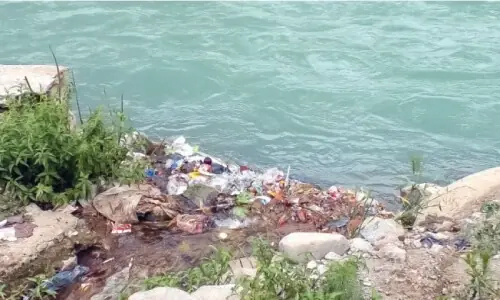
The official said a recent survey of the surrounding areas revealed massive plastic pollution. “All kinds of plastic, especially water bottles and plastic bags, eventually find their way into the lake,” he said.
He added that Rawal Dam also required extensive de-silting to clear the bed of the water body, which could be another reason behind fish deaths.
In the first week of June, Pak-EPA found hazardous material, including discarded syringes, hospital waste and large quantities of plastic items, during a cleanup drive along the shores of Rawal Lake.
The drive was organised to mark World Environment Day and highlighted the severe pollution threatening the lake’s ecosystem.
Dr Zaigham Abbas said there was no doubt that pollution was flowing into the lake.
“Senator Sherry Rehman, who is chairperson of the Senate Standing Committee on Climate Change, has repeatedly demanded the installation of a sewage treatment plant upstream of Rawal Lake to prevent pollution from entering the water body. A sewage treatment plant is the only technical solution to this problem,” he said.
Fish deaths in Rawal Lake have become a recurring issue. In 2024, a severe drop in water levels combined with untreated waste triggered a massive fish die-off.
In 2023, illegal and destructive activities targeted the lake’s wildlife, with individuals caught mixing chemicals and poison near the dam.
“The government has now approved funding for establishing a sewage treatment plant upstream to prevent hazardous waste from flowing into the lake,” Dr Zaigham Abbas said.
Despite receiving only a nominal allocation in this year’s budget, the Capital Development Authority (CDA) has decided to launch the long-delayed sewage treatment plants (STPs) project aimed at stopping the flow of untreated waste into Rawal Dam.
According to budget documents, the total cost of the project is Rs6.07 billion, while the federal government has earmarked Rs449 million for the fiscal year 2026-27.
The level of funding suggests that even if the project is launched during the current fiscal year, its completion will take considerable time.
Tons of waste collected
Over 200 volunteers participated in the Rawal Dam cleanliness drive, and approximately two tons of waste were collected from the surroundings of Rawal Dam, says the Capital Development Authority (CDA).
A press release said that on the direction of the CDA chairman, the cleanliness drive was conducted, aimed at promoting environmental protection and raising public awareness regarding cleanliness.
“CDA and Metropolitan Corporation Islamabad (MCI) in collaboration with Jazz World, successfully organised a cleanliness drive at Rawal Dam,” read the press release.
The cleanliness drive was led by Chief Officer MCI, Dr Anum Fatima, alongside representatives of Jazz World, with over 200 volunteers from CDA, MCI, various NGOs, students and civil society participating enthusiastically.
During the campaign, volunteers collected 80 bags of garbage and removed approximately two tons of solid waste from the surroundings of Rawal Dam, cleaning the area.
Speaking on the occasion, Chief Officer MCI said that this cleanliness drive was undertaken in the larger public interest to ensure environmental protection and highlight the importance of responsible waste disposal. She highlighted that CDA and MCI, in coordination with the Government of Punjab and other relevant institutions, are working on comprehensive and sustainable measures to protect Rawal Dam from pollution. She said that these measures include the installation of a wastewater treatment plant (STP) to prevent polluted water from entering Rawal Dam.
Chief Officer MCI appealed to citizens to refrain from throwing garbage into the nullahs, particularly those originating from Bhara Kahu and Murree, as these nullahs are among the major sources of pollution flowing into Rawal Dam.
Published in Dawn, July 23rd, 2026