SC reserves ruling on jurisdictional dispute with FCC over authority to hear bail applications in pending NAB appeals
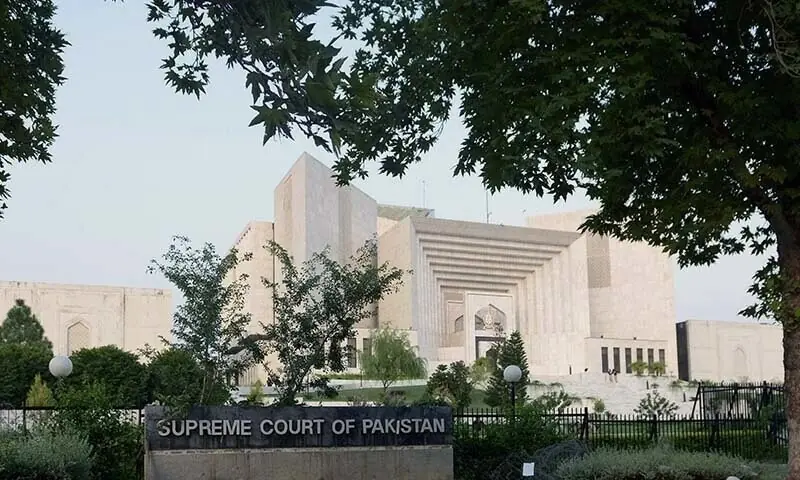
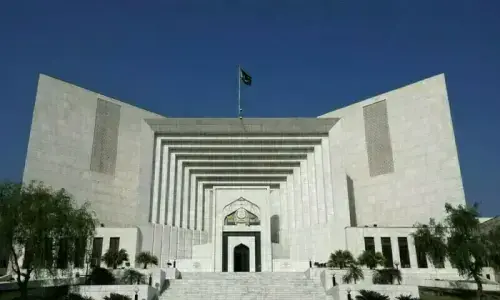
ISLAMABAD: The Supreme Court (SC) on Thursday reserved its ruling on a thorny jurisdictional dispute over whether it retains the authority to hear bail applications in pending National Accountability Bureau (NAB) appeals, or if such pleas must be transferred to the newly established Federal Constitutional Court (FCC) under the 27th Amendment of the Constitution.
Headed by Justice Muhammad Ali Mazhar, a three-judge SC bench —also consisting of Justice Musarrat Hilali and Justice Shahid Bilal Hassan — hinted while closing the case that the court’s determination would be announced in a day or two.
The bench is seized with the dispute over whether bail applications in pending NAB appeals fall within the category requiring transfer to the FCC — now a top court constituted under the 27th Constitutional Amendment.
The federal government has taken the position before the SC that both appeals and bail applications in pending NAB cases will now be heard by the FCC.
Senior counsel Ibadur Rehman Lodhi, while representing under-trial prisoner Aamir Mahmood, insisted that bail applications of under-trial prisoners such as his client fell within Section 497 of the Criminal Procedure Code (CrPC), which deals with the grant of bail, and not Section 426 — relating to the suspension of sentence of a convicted individual by the appellate court — that would also allow the person to be released on bail while his appeal was pending.
Therefore, the second appeal, as provided under the recently inserted Section 32-A through the NAB Amendment Act, will come into play against convictions awarded by the high courts. In pending matters, the SC is competent to hear bail applications under Section 32 of the NAB law, it was argued.
Section 32-A, which was inserted into the act on March 5, provides for a second appeal. The amendment states that any person convicted, or the Prosecutor General Accountability (if so directed by the Chairman NAB), who is aggrieved by a decision made by the high court under Section 32, may prefer a second appeal to the FCC within 30 days.
Justice Muhammad Ali Mazhar observed that the court was not examining Parliament’s intention behind amending the NAB law. He added that the SC had not surrendered its authority; rather, the 27th Amendment stated that the appeals would go to the FCC.
The observation came when, during the hearing, Justice Mazhar wondered how the SC could become the appellate authority in bail matters when the NAB law suggested that the appellate forum was the FCC. The court asked the counsel to suggest a legal way for the SC to hear bail applications in NAB cases.
“For God’s sake, the Supreme Court should not surrender its authority for some ‘clandestine’ motives of the government,” Advocate Lodhi replied, emphasising that the court should have “some semblance of authority”.
Lodhi reiterated that in NAB cases, only appeals against the high court’s final decision were to go to the FCC; in case the bail was not granted by the high court, the case would be heard by the SC. Section 32 of the National Accountability Ordinance does not apply to bail matters, he said.
Justice Mazhar wondered whether, if the SC converted the bail application into appeal, it would become an appellate forum — as whenever the court granted bail to an accused, their application was converted into an appeal.
The counsel emphasised that the law did not give the FCC the authority to hear bail matters; rather, the FCC had been made the forum of appeal against high court decisions only in NAB cases.
Justice Mazhar reminded him that under Article 199, appeals against high court decisions were to be handled by the FCC.
He asked whether there was any judicial precedent for the SC to hear a case despite not being the forum of appeal, adding that the court was asking the counsel to suggest some middle ground.
The counsel reiterated that the central appeal against the high court decision in NAB cases was to be handled by the FCC, but the bail application could be heard by the SC.
The word “appeal” and not “bail” was used in the NAB Amendment Act on March 5, the counsel added.
During the hearing, Justice Mazhar wondered whether the SC could have any other supervisory role under the law.
Attorney General for Pakistan (AGP) Mansoor Usman Awan pointed out that there had been instances in the past where the SC made decisions in bail matters by examining the entire case, such as in the case of Khawaja Saad Rafique’s bail.