Large-Scale Manufacturing grows 5.77pc despite May slump


 0
0

ISLAMABAD: The Large-Scale Manufacturing (LSM) sector posted a year-on-year growth of 5.77 per cent in the first 11 months of 2025-26, suggesting a revival in industrial production.
The Quantum Index of Manufacturing (QIM) stood at 121.65 during July-May FY26, compared to 115.02 in the corresponding period last year, according to figures released by the Pakistan Bureau of Statistics (PBS) on Wednesday.
However, LSM production shrank 0.98pc year-on-year in May. However, it recorded growth of 1.21pc over April.
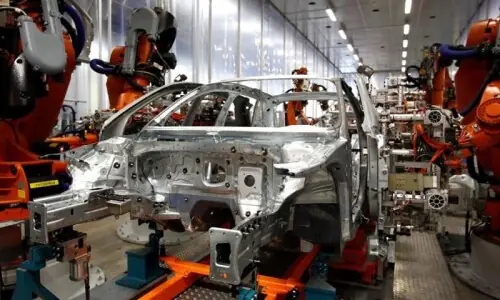
The PBS attributed the cumulative growth primarily to automobiles, garments, food products and petroleum products. The automobile sector remained the biggest contributor, adding 1.53 percentage points to overall growth after production surged 58.82pc during 11MFY26. Food products contributed 1.36 percentage points, followed by garments with 1.20 points and petroleum products with 0.78 points.
Auto, food, garments drive industrial revival in 11MFY26
Cement, electrical equipment, furniture, beverages, tobacco and other transport equipment also posted positive contributions. Despite the overall improvement, several key industries continued to weigh on manufacturing activity. Pharmaceutical production contracted 8.07pc in 11MFY26, chemicals declined 2.64pc, iron and steel products fell 7.49pc and fertiliser output dropped 2.25pc.
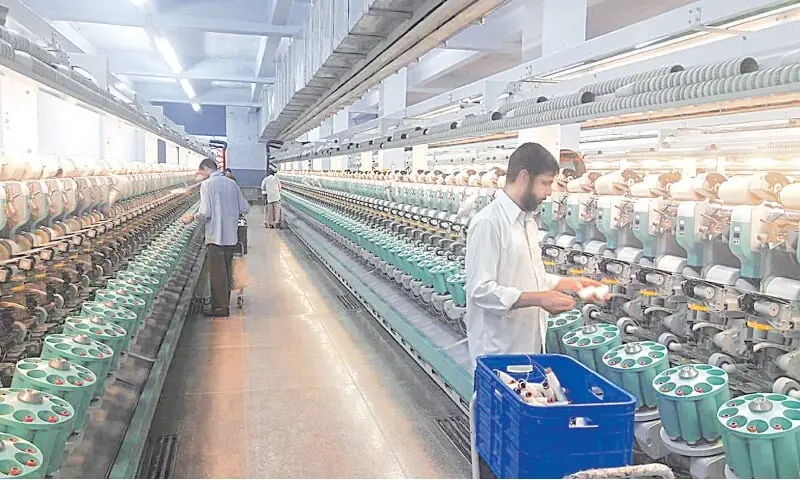
Textile production, the largest manufacturing segment by index weightage, remained virtually flat with a marginal decline of 0.09pc, reflecting the sector’s continued weakness.
The food group output rose 7.75pc year-on-year in 11MFY26. Wheat and rice milling grew 0.76pc and starch and its products by 0.13pc. The sugar, bakery, and chocolates sectors recorded a 31.54pc surge.
However, cooking oil production decreased 1.97pc, vegetable ghee production fell 4.90pc, and tea blended declined by 8.95pc.
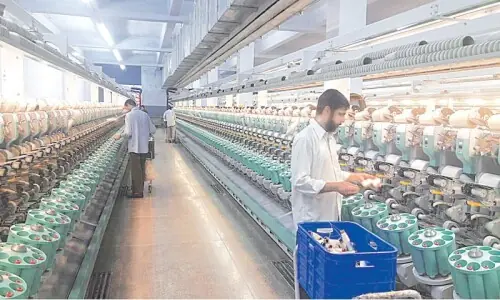
The overall textile sector partly posted a negative growth of 0.09pc in 11MFY26. Cotton yarn increased by 1.26pc, while cotton cloth increased by 0.17pc, accounting for more than 80pc of the textile sector. The primary cause of the slowdown in production was a slight decline in export unit value due to lower demand for textiles.
Garment exports jumped 7.31pc in 11MFY26.
Coke and petroleum products surged 10.56pc in 11MFY26. Most petroleum products posted positive production growth. Petrol production increased by 13.04pc, and high-speed diesel by 17.01pc. The LPG production rose 14.56pc, while kerosene dipped by 4.12pc in 11MFY26. However, furnace oil output dipped 0.76pc.
The automobile sector grew 58.82pc in 11MFY26. This was mainly driven by a 60.60pc surge in jeep and car production, followed by trucks at 76.88pc and buses at 23.66pc. However, production of light commercial vehicles declined by 11.27pc in 11MFY26 compared with a year ago.
The production of pharmaceutical products dipped by 8.07pc, and the production of fertilisers by 2.25pc, respectively.
Iron and steel production declined 7.49pc in 11MFY26. The production of rubber products surged by 14.20pc, non-metallic minerals by 6.31pc and electrical equipment by 13.50pc.
Published in Dawn, July 16th, 2026