‘Near-normal rains’ forecast for mountainous regions
• PMD predicts above-normal temperatures may accelerate snow and glacier melt
• Road links severed by landslides in Gilgit-Baltistan
RAWALPINDI/GILGIT: The Pakistan Meteorological Department’s (PMD) seasonal outlook indicates that Gilgit-Baltistan (GB) and adjoining parts of Azad Jammu and Kashmir (AJK), as well as upper Khyber Pakhtunkhwa, are likely to receive near-normal rainfall during the 2026 monsoon season.
The outlook states that seasonal temperatures are expected to remain above normal across most parts of the Hindu Kush- Karakoram-Himalaya (HKH) region, with relatively larger positive temperature anomalies likely over the eastern parts of GB and adjoining areas. Warmer conditions may accelerate seasonal snow and glacier melt and contribute to enhanced river flows during the monsoon period.
According to the PMD’s seasonal outlook for HKH region, this assessment is broadly consistent with the outlooks issued by the International Centre for Integrated Mountain Development (ICIMOD), the Asia-Pacific Economic Cooperation Climate Centre (APCC), the Copernicus Climate Change Service (C3S), the International Research Institute for Climate and Society (IRI), and the 34th Session of the South Asian Climate Outlook Forum (SASCOF-34).
The PMD said near-normal rainfall would support water availability, but increased rainfall combined with faster snow and glacier melt could raise river flows and flood risks in vulnerable valleys.
The department warned that intense, short-duration rainfall events may trigger flash floods, landslides, debris flows, and slope failures, particularly in mountainous terrain. Above-normal temperatures may further accelerate snow and glacier melt, resulting in increased runoff and heightened risks of localised glacier-related hazards.
Warming conditions may increase the risk of Glacial Lake Outburst Floods (Glofs), with the PMD urging communities near rivers, streams and glacial valleys to remain vigilant and follow official advisories.
Overall, the possibility of localised heavy rainfall events may increase the risk of hydro-meteorological hazards, underscoring the need for continued preparedness and close monitoring of weather and flood forecasts.
Landslides block roads
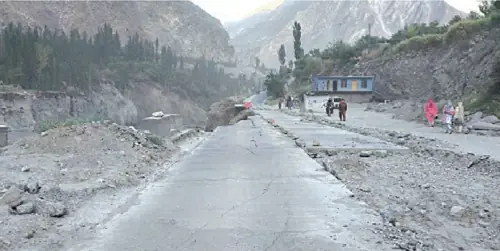
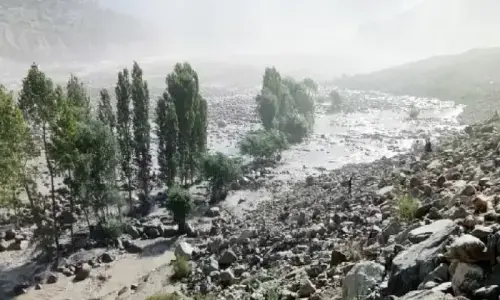
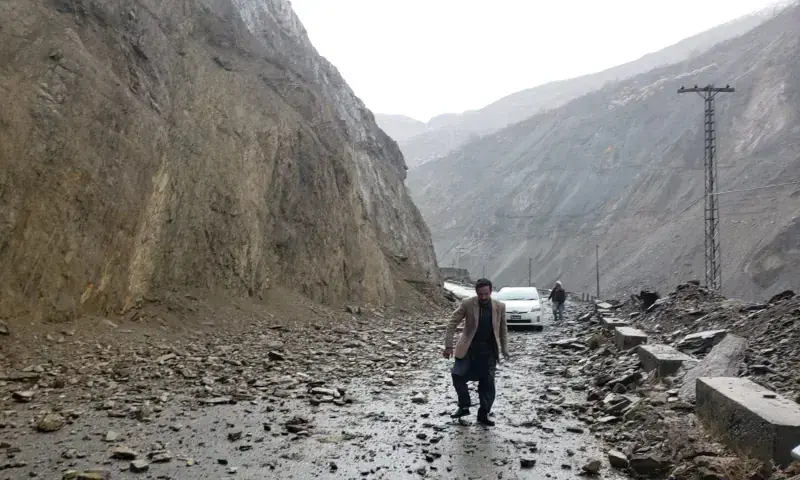
Meanwhile, river erosion, landslides and flash floods have blocked roads, damaged public and private property in GB.
According to the Gilgit-Baltistan Communication and Works Department, the Astore Valley Road has been closed to traffic due to landslides and large rockfalls at several sections.
Landslides have also blocked the only connecting roads to Chipurson Valley and Misgar Valley in upper Hunza.
Similarly, the only land route connecting the remote village of Misgar in upper Hunza remained blocked due to landslides and mudflows following rainfall.
Published in Dawn, July 15th, 2026