0
0

LAHORE: Pakistan’s inability to move beyond exporting raw seafood, combined with its overwhelming dependence on foreign shipping lines for international trade, is costing the country billions of dollars annually in lost exports and freight payments, highlighting the untapped potential of its blue economy as a source of sustainable growth and foreign exchange.
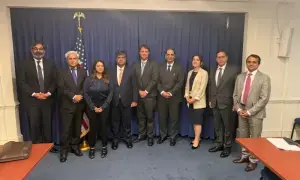
This was the central message delivered by Federal Minister for Maritime Affairs Junaid Anwar during his visit to the Lahore Chamber of Commerce and Industry (LCCI), where discussions focused on the need for structural reforms, value addition and greater private-sector participation in maritime industries.
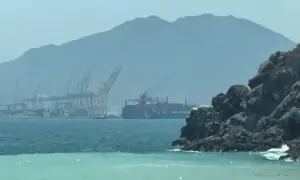
Addressing the business community, the minister said Pakistan’s maritime economy remained one of the country’s most underutilised economic assets despite its strategic location at the crossroads of South Asia, Central Asia and the Middle East, a coastline stretching over 1,000 kilometres along the Arabian Sea, and three major commercial ports – Karachi Port, Port Qasim and Gwadar Port.
He argued that fisheries, shipping, logistics, shipbuilding and port services possess the potential to become major contributors to exports, employment and industrial growth if supported by consistent policy measures and investment.
The minister particularly highlighted the fisheries sector, saying Pakistan continues to export tuna and other seafood largely in raw or semi-processed form, allowing importing countries to undertake processing, branding and packaging before selling the products in premium international markets at substantially higher prices.
“Countries in the Gulf, Thailand and Vietnam are importing seafood from Pakistan, processing it under their own brands and capturing the higher margins in global markets. Pakistan must move up the value chain instead of remaining a supplier of raw products,” he said.
According to official estimates, Pakistan’s fisheries exports have crossed $568 million annually, but industry experts believe the figure could multiply several times if the country develops internationally-certified seafood processing plants, modern cold-chain logistics, traceability systems, value-added packaging and globally recognised Pakistani seafood brands.
Analysts note that the global seafood market is valued at hundreds of billions of dollars annually, with processed seafood accounting for a significantly larger share of export earnings than raw fish. Pakistan’s Exclusive Economic Zone (EEZ), which expanded to nearly 290,000 square kilometres after the recognition of its extended continental shelf by the United Nations, provides access to rich marine resources that remain only partially exploited.
Economists believe the blue economy – comprising fisheries, ports, shipping, coastal tourism, offshore energy, marine biotechnology and maritime services – could become one of Pakistan’s strongest long-term growth engines if supported by coherent industrial and trade policies. Yet its contribution to the GDP remains modest compared with countries that have successfully integrated maritime industries into their export strategies.
The minister said the government’s objective was to encourage private investment across the maritime value chain rather than limiting development to public-sector initiatives.
He invited the business community to participate in forthcoming bidding processes for maritime projects, saying investment opportunities would be available in port development, cargo handling, logistics, fisheries, shipbuilding and associated industries.
Among the major initiatives under consideration or implementation, he referred to a $1.4 billion shipbuilding project at Port Qasim, expansion of cargo and container terminals, development of additional energy-storage facilities and measures aimed at strengthening Pakistan’s national shipping capacity.
The emphasis on domestic shipping assumes added significance as Pakistan currently relies overwhelmingly on foreign vessels for its international trade. Industry estimates suggest that nearly 95pc of the country’s seaborne trade is transported by foreign shipping companies, resulting in an annual freight bill of around $5 billion, a persistent drain on foreign exchange reserves.
LCCI President Faheemur Rehman Saigol observed that reducing dependence on foreign shipping lines should become a national economic priority. He said investment in domestic shipping fleets, shipbuilding and ship recycling could help retain a larger portion of freight earnings within the country while creating skilled employment, encouraging technology transfer and supporting ancillary engineering industries.
Pakistan is already home to one of South Asia’s major ship-breaking facilities at Gadani, but experts argue that upgrading the sector into a modern ship recycling industry compliant with international environmental and labour standards could significantly increase its competitiveness and attract higher-value business.
Mr Saigol stressed that Pakistan’s blue economy could emerge as a major pillar of economic growth if policymakers prioritised value-added exports, modern port infrastructure, efficient customs procedures and greater private-sector participation across maritime industries.
Economists say the maritime sector also holds strategic importance beyond fisheries and shipping. Gwadar’s location near key international sea lanes, Karachi’s role as the country’s principal commercial gateway and Port Qasim’s industrial linkages provide Pakistan with an opportunity to position itself as a regional logistics and transshipment hub, particularly as trade corridors linking Central Asia, western China and the Gulf continue to evolve.
However, analysts caution that realising this potential will require sustained reforms, including investment in port connectivity, digital logistics systems, specialised maritime financing, internationally accredited quality standards for seafood exports, competitive taxation, regulatory stability and policies that encourage domestic and foreign private investment.
Without such structural changes, they argue, Pakistan risks continuing to export low-value raw marine products while importing high-value processed goods and paying billions of dollars each year to foreign shipping companies – missing an opportunity to convert its maritime geography into a durable source of export growth, industrial diversification and foreign exchange earnings.
Published in Dawn, July 13th, 2026