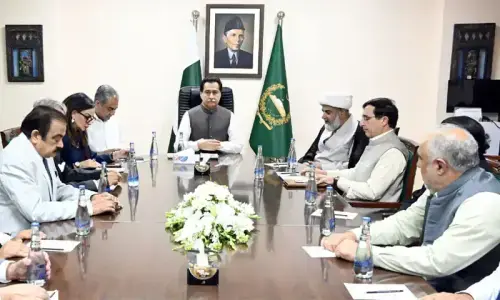
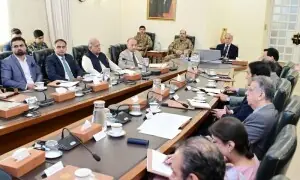
PRIME Minister Shehbaz Sharif’s recent call to move from stabilisation to growth, job creation and export promotion was overdue. But the danger lies in treating the shift as a change of direction rather than a change in the quality of economic policy. Mr Sharif said macroeconomic stability has been restored and the next task is growth driven by technology, production, employment and exports. He is not wrong. He pointed to rising reserves, remittances and IT exports, a return to the international debt market, and better investor confidence. He also admitted that industries protected by tariffs and subsidies have failed to become competitive. That contradiction lies at the heart of the growth challenge. Successive set-ups have pursued growth by distributing incentives rather than improving productivity. Tax breaks, subsidised credit, tariff protection, and preferential treatment have produced protected businesses, not globally competitive ones.
That calls for distinguishing between growth and productive growth. A temporary expansion in construction, real estate or consumption can raise GDP. It cannot create foreign exchange earnings needed to sustain that expansion. Our recurring problem is that growth eventually runs into the external account. Imports rise, reserves come under pressure, and the country returns to stabilisation. That cycle must be broken. The IMF’s own assessment makes clear that macroeconomic stability remains a prerequisite, not an obstacle to growth. It has called for deeper reforms to improve governance, competition, productivity, the business environment, energy sector viability and human capital. It has also warned that unfinished structural reforms would leave Pakistan dependent on the public sector and vulnerable to renewed imbalances. This is why the language of a ‘shift’ needs careful handling. Stabilisation cannot simply be relaxed to create room for faster growth. The government still has to protect fiscal discipline, rebuild external buffers and keep inflation under control. The real transition to growth, therefore, should be from stabilisation through transformation. Growth cannot be proclaimed merely because the immediate crisis has eased. Growth must come from expanding globally competitive manufacturing, modernisation of agriculture, IT and services, and export-oriented SMEs. The test is whether the government can make growth durable rather than another short-lived expansion.
Published in Dawn, October 4th, 2026