Pakistan, Turkiye, Saudi Arabia agree to rapid force deployment in the kingdom under Makkah pact
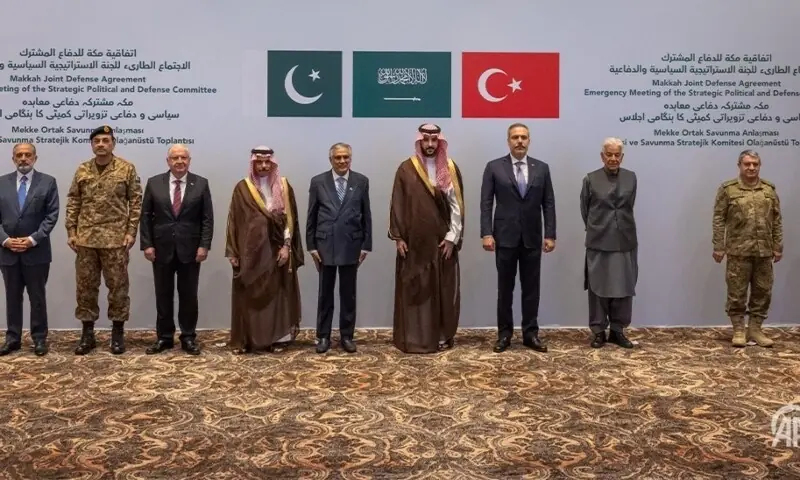

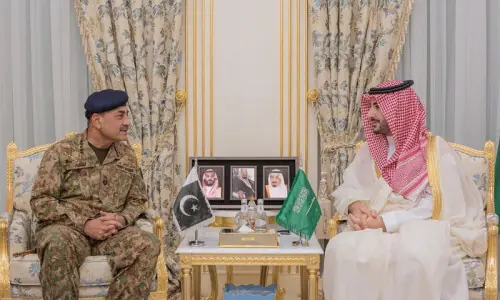
Pakistan, Saudi Arabia and Turkiye have agreed to deploy military forces and capabilities rapidly in the kingdom, the Foreign Office (FO) said on Monday following an emergency meeting of the Makkah Joint Defence Agreement in Riyadh.
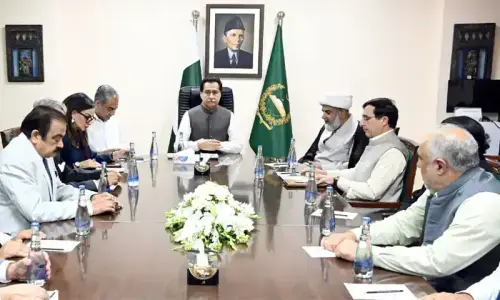
The three countries held an emergency meeting of the Strategic Political and Defence Committee (SPDC) of the Makkah Defence Alliance to address the security developments and threats facing Saudi Arabia, the FO statement said.
“The committee decided to move immediately to the practical implementation of the collective defence commitments and to take the necessary measures to provide the agreed military forces and capabilities and ensure their rapid deployment in the kingdom, in accordance with the approved arrangements and the national legislation of the parties, thereby enhancing readiness, military integration, and the collective capacity to confront and counter threats,” it added.
While the statement did not specifically name any threat, the development comes against the backdrop of Houthi attacks on Saudi Arabia in the Yemen conflict.
In the Riyadh meeting, the three members of the Makkah Defence Alliance condemned “in the strongest terms” the attempted targeting of Makkah and Madina, as well as the continuing attacks targeting cities and civilian and economic facilities in Saudi Arabia, reaffirming their “unequivocal rejection of any attack or threat against the kingdom’s security and territorial integrity”, the statement said.
For their part, Pakistan and Turkiye commended the “vigilance and readiness of the Saudi armed forces, as well as the professionalism and high level of competence they have demonstrated in countering the threats and attacks facing the kingdom and in safeguarding its security and territorial integrity”, the FO said.
The SPDC reviewed the outcomes of the political and military consultations preceding the meeting and approved the recommendations submitted to it, affirming that the Makkah pact embodied a firm commitment to collective defence and a unified position in confronting threats, it said.
Moreover, the three countries affirmed that the security of each member of the alliance was an “integral part of the collective security of the three countries, and that translating the Makkah Agreement for Joint Defence into practical measures demonstrates the credibility of the commitment to collective defence, strengthens the effectiveness of deterrence, and reaffirms the unity and determination of our three countries to defend their security, sovereignty, and territorial integrity, in accordance with the provisions of the agreement”.
Defence Minister Khawaja Asif, who was part of Pakistan’s delegation in the meeting, joined Geo News programme ‘Aaj Shahzeb Khanzada Kay Saath’ via telephone and said Saudi Arabia had made “gains and recovered some areas” in Yemen in the ongoing fighting with the Houthis.
When asked about a possible operational role by Pakistan and Turkiye, the defence minister replied that both nations had a “presence in theatre”, but only Saudi troops were involved in combat operations.
“Whatever assistance they require is being provided. But right now, the Turkish and Pakistani armies are playing a supportive role,” he said, noting that Pakistan was involved in reconnaissance.
The defence minister said the meeting was primarily focused on formalising the Makkah alliance’s operational structure.
“The organisational structure of the alliance was formalised during today’s meeting,” he said.
As part of the institutional development of the Makkah alliance, the SPDC decided to appoint Pakistan’s Lieutenant General (Retd) Nauman Mahmood as the first secretary general of the alliance for a three-year term, the FO statement said.
“The parties welcomed him, wished him every success in the discharge of his duties, and expressed their confidence in his contribution to advancing the alliance and achieving its objectives,” it added.
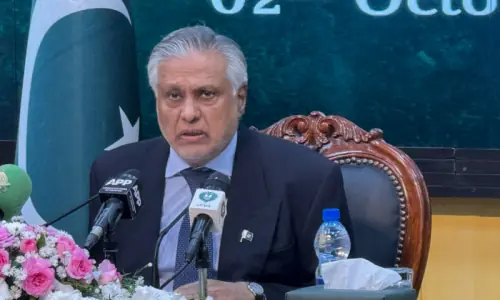
In an earlier statement on social media platform X, the FO said Pakistan’s delegation to the meeting of the Strategic Political and Defence Committee (SPDC) included Deputy Prime Minister and Foreign Minister Ishaq Dar, Chief of Defence Forces and Chief of Army Staff Field Marshal Asim Munir and Asif.
“The meeting will also be attended by the respective ministers of foreign affairs, ministers of defence, as well as chiefs of general staff of the Kingdom of Saudi Arabia, and the Republic of Türkiye,” the FO added.
The Makkah defence pact, signed on Aug 7, aims to strengthen collective deterrence and empower its signatory states to treat an attack against one of them as an attack against all of them.
The SPDC meeting under it has been held as Yemen’s Saudi-led coalition government launched a major military campaign on Sunday to recapture territory held by the Houthis.
Fighting between Saudi Arabia and Yemen’s Houthis showed no signs of abating over the weekend, with the Houthis saying the kingdom had launched dozens of strikes on Yemen’s capital Sanaa, after which they attacked an Aramco facility with ballistic missiles and drones south of Riyadh.
The foes have traded strikes since the Houthis seized all of Yemen’s Red Sea coast and took control of the Bab al-Mandeb strait in a lightning offensive.
On Sept 25, the military chiefs of Pakistan, Turkiye and Saudi Arabia met in Riyadh for urgently convened talks under the pact in light of the Houthi attacks on Saudi Arabia.
On Sept 18, Inter-Services Public Relations (ISPR) Director General Lieutenant General Ahmed Sharif Chaudhry had expressed solidarity with Saudi Arabia, saying Pakistan will go to “any extent” to defend the Gulf state, adding that Islamabad’s commitment to the kingdom’s security is “unconditional”.
Defence Minister Asif also earlier reaffirmed that Pakistan would “practically and diplomatically” stand by Saudi Arabia against Yemen’s Houthi rebels if the situation escalated.